


Ear Mites in Cats: Causes, Symptoms, and the Easiest Ways to Treat Them at Home
By PawHappiness Team | Updated | 5 minutes read | Cat Health
Table of Contents
- What Exactly Are Ear Mites in Cats?
- Common Symptoms of Ear Mites in Cats You Shouldn’t Ignore
- How Ear Mites in Cats Are Diagnosed by a Vet
- Treating Ear Mites in Cats at Home (Safely and Effectively)
- How to Prevent Ear Mites in Cats from Coming Back
- When to See a Vet Immediately
- Best Ear Mite Treatments and Tools (Amazon Recommendations)
- Conclusion
Ear mites in cats are one of those tiny problems that can create a surprisingly big headache for both pets and owners. If your cat has been scratching nonstop, shaking their head like crazy, or giving you that “please help me” look, ear mites might be the culprit. These microscopic parasites love hiding inside the ears, causing itchiness, irritation, and discomfort. While the problem sounds scary at first, the good news is that it’s actually very common and very treatable.
Many cat owners don’t realize their pets have ear mites until the symptoms get worse. That’s why understanding the early signs is so important. In this article, we’ll break down everything in a simple, friendly, everyday language—what ear mites are, how to spot them, how to treat them, and when to call your vet. You’ll also learn steps you can take at home to keep your cat comfortable and prevent future flare-ups. Let’s get started so your feline friend can feel better fast.
What Exactly Are Ear Mites in Cats?
Ear mites are tiny parasites—barely the size of a pin—that live inside your cat’s ear canal. They survive by feeding on wax and skin oils, and while that sounds harmless, they cause a whole lot of irritation.
Because these mites multiply quickly, an untreated case can go from mild itching to full-blown inflammation in just a few weeks. And since cats often live, sleep, and groom together, ear mites spread easily between pets.
Common behaviors that increase risk:
- Outdoor cats meeting stray animals
- Multi-cat households
- Cats who share grooming tools, bedding, or sleeping spots
- Kittens with weaker immune systems
Understanding the cause helps you tackle the problem more effectively—not just treating your cat but reducing the chances of mites coming back.
Common Symptoms of Ear Mites in Cats You Shouldn’t Ignore
Spotting ear mites early can save your cat from a lot of discomfort. Even though the mites are microscopic, the symptoms are easy to see.
Signs your cat may have ear mites:
- Constant scratching around the ears
- Frequent head shaking
- Brown or black “coffee-ground” debris inside the ear
- Red, irritated skin around the ear area
- Strong odor coming from the ear
- Thick crust or wax buildup
- Sensitivity when you touch their ears
Cats are pros at hiding discomfort, so if you notice even one or two of these signs, take it seriously. Left untreated, ear mites can lead to deeper infections or even hearing issues.
How Ear Mites in Cats Are Diagnosed by a Vet
While many mild cases look obvious, an official diagnosis helps you avoid treating the wrong problem. Ear mites can sometimes be mistaken for yeast infections, bacterial infections, or allergies.
Here’s what usually happens at the vet:
- The vet looks inside the ear with an otoscope.
- They may take a small sample of the debris.
- The sample is checked under a microscope.
- If mites are found, treatment begins right away.
Even if you plan to treat at home, it’s smart to get a diagnosis first—especially if it’s your first time dealing with this. It ensures you’re giving the right treatment and prevents complications later.
Treating Ear Mites in Cats at Home (Safely and Effectively)
Now for the part most cat owners worry about—treatment. Thankfully, treating ear mites doesn’t have to be difficult. Most cases can be handled at home with simple, vet-approved products.
1. Clean Your Cat’s Ears Gently
Before applying any medication, clean the ears to remove wax and mite debris.
This helps the treatment work better.
Use a gentle ear-cleaning solution made for cats. Avoid DIY mixtures—vinegar or oils can irritate their sensitive ears.
2. Apply an Ear Mite Treatment
The best treatments are usually:
- Topical drops
- Spot-on treatments
- Medications recommended by veterinarians
Most products kill mites at all life stages, but they need to be used consistently for 2–3 weeks to fully eliminate eggs.
3. Keep Your Cat’s Environment Clean
Mites can survive outside the body for a short time, so it’s important to clean what your cat interacts with daily:
- Wash bedding
- Clean blankets or cat trees
- Vacuum carpets
- Disinfect grooming tools
This helps break the cycle and prevents reinfestation.
How to Prevent Ear Mites in Cats from Coming Back
Prevention is much easier than dealing with a flare-up. Once your cat recovers, follow these simple habits to keep mites away long-term.
Practical Prevention Tips:
- Check your cat’s ears weekly.
- Clean their ears once a month with a gentle solution.
- Avoid sharing grooming tools between pets.
- Keep outdoor contact minimal if your cat has recurring issues.
- Use monthly flea and mite protection if recommended by your vet.
If you have multiple cats, treat all of them—even if only one shows symptoms. Ear mites spread so quickly that treating just one pet often leads to a cycle of reinfection.
When to See a Vet Immediately
Sometimes home treatment just isn’t enough. If you notice any of these signs, call your veterinarian as soon as possible:
- Your cat is still scratching after two weeks of treatment
- There’s swelling or blood inside the ear
- Your cat seems lethargic or refuses to eat
- There’s a strong odor or pus-like discharge
- Head tilt or balance problems appear
These may indicate an infection or another underlying issue that needs medical attention.
Best Ear Mite Treatments and Tools (Amazon Recommendations)
Here are a few helpful products that cat owners love:
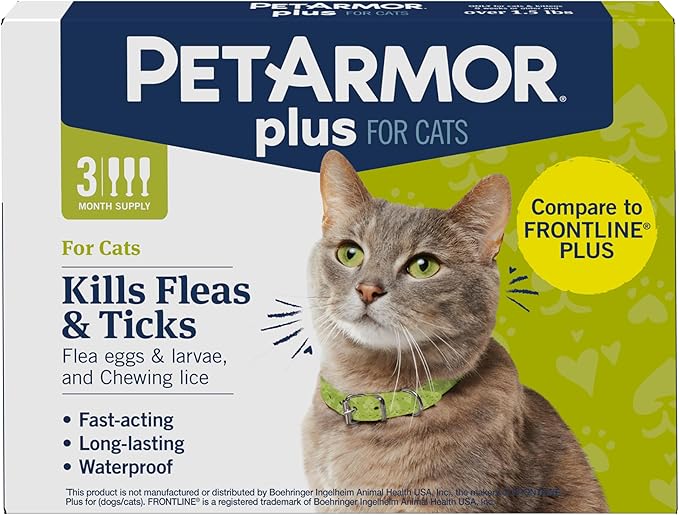
PetArmor Plus Flea and Tick Prevention for Cats
Active Ingredients: Friponil (9.80%), (S)-Methoprene (11.80%). Other Ingredients: (78.40%), Total (100.00%). Your pets are family, and PETARMOR helps you confidently care for your cat, especially when it comes to flea and tick control.
Buy NowConclusion
Ear mites in cats might look like a big problem, but once you understand the symptoms and treatment steps, it becomes much easier to handle. The key is catching the signs early—scratching, head shaking, and dark debris inside the ears. With gentle cleaning, proper medication, and a little environmental care, most cats bounce back quickly.
If the symptoms are severe or don’t improve after consistent treatment, don’t hesitate to visit your vet. Your cat will feel much more comfortable, and you’ll have peace of mind knowing everything is handled the right way. For more tips, product recommendations, and guides to keep your pets happy and healthy, feel free to explore more resources anytime.
Related Articles






Extra Deals & Recommendations From Our Partners
Discover exclusive offers, tools, and products from brands we collaborate with.


Orthopedic Dog Beds for Medium Dogs
This dog bed is made of high-density egg-crate foam,which can evenly distribute the dog's weight,relieve all joints and pressure points.The quadrilateral cushion design enhances ultimate comfort and security,providing your pet with various comfortable snuggling positions.The shape of the soft cushion is filled with fullness,which can support the pet's head and neck,making it sleep more comfortably.

Antibiotics for Cats, Natural Antibiotic Pet
Herbal cat antibiotic drops support ear, skin, urinary, and respiratory infections with Apple Cider Vinegar, Pau D-Arco, Goldenseal & Echinacea. Non-GMO, sugar-free, fast-absorbing, safe for all cats.

Pet Grooming Combo – Blue Deshedding Brush
This 2-in-1 grooming brush and comb set makes dematting and deshedding easy for dogs and cats. Designed with safe, rounded edges, it gently removes knots, loose fur, and undercoat without hurting your pet. The undercoat rake features wide and dense sides for dematting and shedding, while the dual-sided metal comb reaches legs, head, and tail. Durable stainless steel teeth and a lightweight, ergonomic handle ensure comfortable, long-lasting grooming.

Zeus Fresh & Clear Elevated Drinking Fountain
Veken’s award-winning 2024 Pet Innovation Category Winner pet fountain delivers cleaner, safer hydration with an upgraded stainless steel build. Its large-capacity water tank reduces refills, while a 5-stage filtration system—featuring silver, scale inhibitors, and activated carbon—keeps water fresh for up to three weeks. All water-contact parts are BPA-free for added safety. An optional soft LED light enhances visibility, helping pets locate the fountain and allowing owners to monitor water levels with ease. Clean design, advanced hygiene, and trusted performance for healthier, happier pets.

Cat Toys Laser Pointer for Indoor
This interactive cat toy features a durable aluminum shell, pocket-size design, and easy slide adjustment. With 7-in-1 modes—including 5 red patterns plus red, purple, and white lights—it’s perfect for play, pet checks, and even emergency lighting. USB rechargeable and eco-friendly, it keeps indoor cats active and strengthens your bond. A fun, practical gift for any pet.

oneisall Dog Clipper Low Noise
The Oneisall silent motor reduces noise by 17%, ensuring that even the most sensitive pets won't be scared, allowing them to enjoy a comfortable grooming experience

Blue Buffalo Baby Blue Natural Kitten Wet Cat Food
Give your kitten a healthy start with Baby BLUE Wet Kitten Food, Chicken Recipe. Made with real chicken as the first ingredient, this high-protein paté supports strong muscle growth. It includes DHA and ARA—fatty acids found in mother’s milk—to aid cognitive and retinal development. With no by-product meals, corn, wheat, or soy, it’s a natural, wholesome meal your kitten will love.

KONG Puppy Toy for Stress Relief
The KONG Ring is a durable chew toy made from KONG’s natural red rubber, designed for long-lasting chewing sessions. Its added nubs enhance the chewing experience while helping clean teeth and support healthy gums. This toy provides enrichment, satisfies natural chewing instincts, and encourages healthy chewing habits.