


How to Handle Ear Mites in Dogs — What Every Pet Owner Should Know
By PawHappiness Team | Updated | 5 minutes read | Dog Health

Table of Contents
- What are Ear Mites? 🐶
- Signs Your Dog Might Have Ear Mites
- Why Ear Mites Shouldn’t Be Ignored
- How to Treat Ear Mites in Dogs: A Step-by-Step Guide
- Everyday Prevention: Keep Ear Mites Away
- Helpful Over-the-Counter Ear Cleaners & Treatments
- When Natural or DIY Tricks Can Help (…But Not Replace a Vet)
- Final Thoughts
When your dog starts scratching their ears nonstop or shaking their head like they’ve got an itch they just can’t scratch, it might be more than just a bug bite — it could be ear mites. Ear mites are tiny parasites that burrow into your dog’s ear canal and cause serious discomfort. The good news? With proper cleaning and treatment, you can help your dog feel better quickly. In this article, we’ll walk you through what ear mites are, how to recognize the signs, and what practical steps you can take to treat and prevent them.
What are Ear Mites? 🐶
Ear mites — scientifically often involving the species Otodectes cynotis — are microscopic parasites that live in the ear canal of dogs (and other pets). Wikipedia+1
Because they’re so small, you usually can’t see the mites themselves. Instead, you’ll notice the effects: irritation, scratching, and ear wax or debris that looks like dark, crumbly “coffee grounds.” Dogs Naturally+2Vca+2
Ear mite infestations are quite common — and many dogs, especially those who spend time outdoors, live with other pets, or have floppy ears, may be at risk. E-Journal UNUD+1
Signs Your Dog Might Have Ear Mites
Here are common symptoms to watch out for:
- Persistent scratching at the ears or shaking the head a lot. Noble Vet Clinic+1
- Dark brown or black crumbly debris/discharge in the ear canal — often described like coffee grounds. Dogs Naturally+1
- Redness, swelling, or sensitivity around the ear. Vca+1
- Foul odor from the ears. Noble Vet Clinic+1
- Your dog rubbing their face, head-shaking, or rubbing against furniture to relieve itch. PDSA+1
If you see these signs, it’s smart to check with a vet to confirm — because other ear issues (like yeast or bacterial infections) can look similar.
Why Ear Mites Shouldn’t Be Ignored
Leaving ear mites untreated can lead to more than just an itchy dog. Over time, mites can cause:
- Secondary infections (bacterial or fungal) as the ear becomes irritated and scratched. MSD Veterinary Manual+1
- Chronic ear inflammation or thickening of the ear canal, making future problems more likely. Noble Vet Clinic+1
- Possible hearing issues or painful ear conditions if the infestation becomes severe. Vca+1
In short: what starts as a small irritant can turn into a long-term problem if ignored.
How to Treat Ear Mites in Dogs: A Step-by-Step Guide
Here’s what a typical treatment plan looks like — often a combination of vet care and home care.
1. Visit the Veterinarian for Diagnosis
A vet will usually examine your dog’s ears, often using an otoscope, and may take a swab of the ear debris to view under a microscope (ear cytology). This helps confirm whether mites, bacteria, or yeast are the real culprit. Noble Vet Clinic+2Purina+2
2. Medicated Treatment (Topical or Oral)
Once confirmed, vets often prescribe:
- Topical drops or ointments applied directly into the ear canal to kill mites and soothe irritation. PetMD+2Purina+2
- Spot-on or oral parasite preventatives (if appropriate), which can control mites and prevent reinfestation. PetMD+1
Treatment duration can vary; sometimes a single course is enough, other times follow-up treatments are needed to ensure eggs and mites are gone. PetMD+1
3. Clean the Ears Gently and Regularly
After vet treatment, cleaning your dog’s ears can help remove debris and reduce the chance of re-infection. Use a vet-approved ear cleanser and follow their instructions carefully (avoid cotton buds — they can push debris deeper). PDSA+1
4. Clean Their Environment — Don’t Forget Bedding & Toys
Because ear mites can spread to other pets and linger on bedding, toys, or grooming tools, make sure to wash any fabric they use in hot water and disinfect effectively. PDSA+1
5. Follow-up Checks
Returning to the vet after treatment is important — sometimes symptoms seem gone but mites or infections still cling on. A follow-up ear check (ear cytology) ensures the problem is really resolved. PetMD+1
Everyday Prevention: Keep Ear Mites Away
Mostly, preventing ear mites is far easier than dealing with an infestation. Here’s what you can do:
- Clean your dog’s ears regularly — once a week or as your vet recommends — especially if they get dirty or wet a lot.
- Use monthly parasite preventatives if your vet recommends them (flea/tick/parasite treatments can also guard against ear mites).
- Keep bedding, toys, and grooming supplies clean. Wash or disinfect regularly.
- Check ears during regular grooming or bathing — early detection is key.
Helpful Over-the-Counter Ear Cleaners & Treatments
If you’re looking for ear-cleaning drops or over-the-counter solutions to support vet care (or as part of routine ear hygiene), here are a few products that pet owners commonly use for dogs dealing with ear mites:
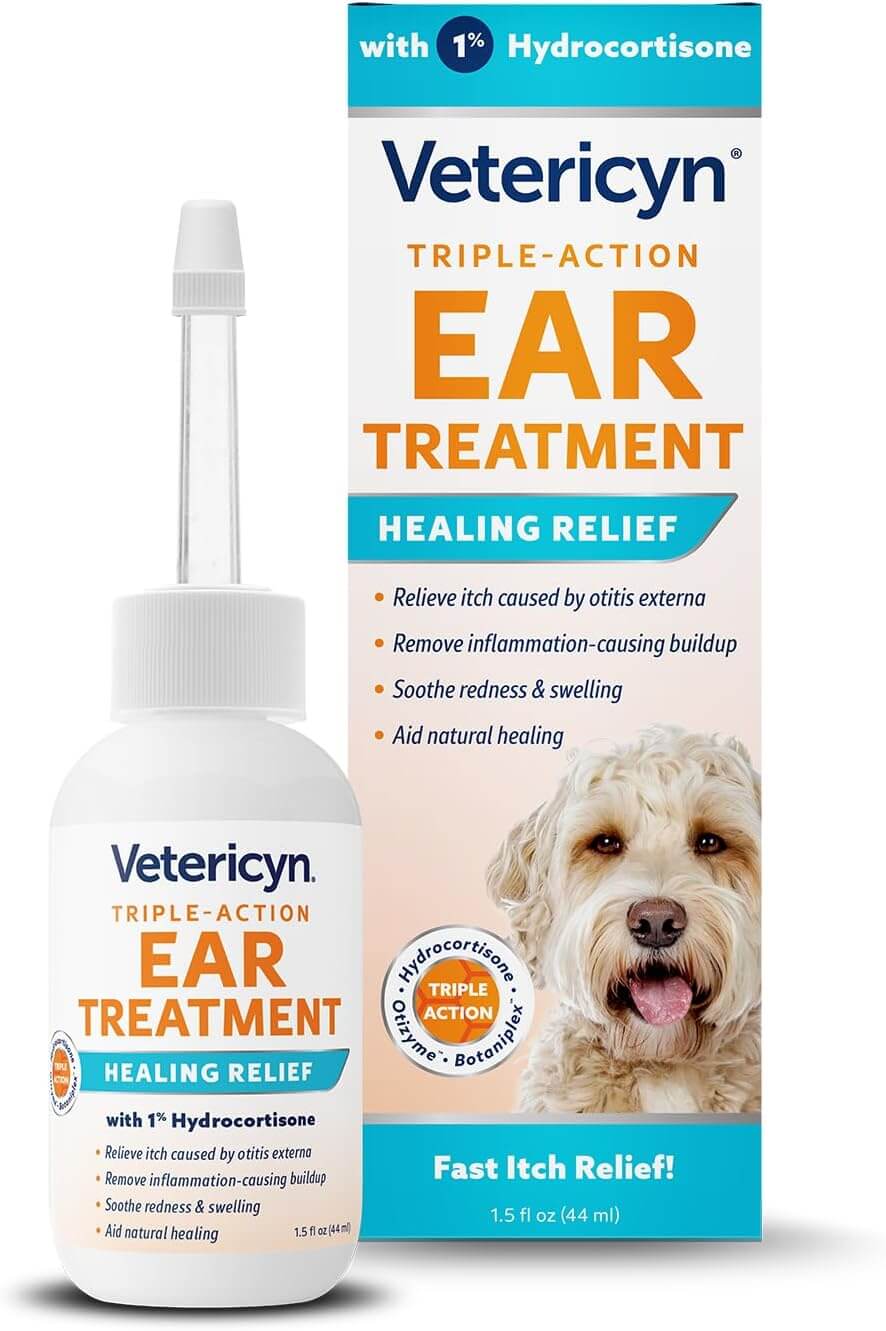
Vetericyn Triple-Action Ear Treatment for Dogs & Cats
Triple-Action Ear Treatment: Vetericyn’s ear solution for dogs and cats is a revolutionary topical treatment that relieves irritations caused by otitis externa and other serious issues.
Buy NowQuick notes on these:
- Hartz UltraGuard Ear Mite Treatment for Dogs — A classic solution designed to kill ear mites on contact and relieve itching fast.
- Oridermyl Ear Drops for Dogs and Cats — Trusted ear-drop formula that helps eliminate mites and reduce odor or irritation.
- Bioline Ear Mite Treatment Oil for Dogs and Cats — A more natural-leaning oil-based treatment that helps get rid of parasites and soothe ears.
- VetWELL Ear Cleanser for Dogs and Cats — Gentle ear rinse to use routinely and prevent wax/debris buildup.
These products can help support ear hygiene or complement vet-prescribed care — but remember: nothing replaces a proper check-up and prescription from a veterinarian when mites are involved.
When Natural or DIY Tricks Can Help (…But Not Replace a Vet)
Some pet owners consider gentle home remedies — like rinsing ears with cooled green tea or using natural oil mixtures — to soothe itching or clean debris. The Spruce Pets+1
However, experts generally warn against relying solely on them. Without killing all stages of the mites (eggs, larvae, adults), infestations can come right back. And certain oils (like tea tree or eucalyptus) can be harmful to pets if ingested or licked. montgomeryvillagevet.ca+1
If you’re using home remedies, treat them as temporary — and always consult your vet as soon as possible.
Final Thoughts
Ear mites may be small — but they can cause big trouble if left untreated. Spotting the signs early (scratching, dark ear discharge, foul odor) and acting quickly with vet care and proper ear cleaning makes all the difference.
With regular ear hygiene, parasite prevention, and a clean environment, you can help your dog stay comfortable and ear-mite–free. If you suspect your dog has mites: don’t wait. Schedule a vet visit, follow through with treatment, and give those ears a breath of fresh air.
Want more tips on pet care, parasites, and keeping your furry friend healthy? Feel free to explore our other guides — and give your dog some extra cuddle time (only mites stay away).





Extra Deals & Recommendations From Our Partners
Discover exclusive offers, tools, and products from brands we collaborate with.


JustFoodForDogs Chicken & White Rice Fresh Frozen Dog Food
BLUE Wilderness Wet Dog Food Beef & Chicken Grill delivers high protein from quality meats to support your dog’s energy and activity. This grain-free recipe contains no poultry by-product meals, corn, wheat, soy, or artificial flavors and preservatives. With rich taste and texture, it helps dogs stay healthy and active with natural, premium nutrition.

Sam & Maui Velvet Adjustable Cat Collar
Dress your cat in luxury with our soft velvet collars, featuring a sturdy nylon inner layer for durability. The rose gold metal buckle adds elegance, while the small bell boosts cuteness and helps you locate your sneaky kitty. Adjustable 8"–12", ideal for most indoor cats. (Note: metal buckle is not breakaway.) Matching dog collars, leashes, and bow ties are also available.

Swihauk Self Cleaning Slicker Brush
Swihauk’s self-cleaning pet brush makes deshedding easy with a quick-release bottom and soft, rounded bristles that groom without hurting your pet. Made with durable stainless steel and a lightweight, ergonomic handle, it removes loose fur effectively for dogs and cats of all hair types. Perfect for puppies, long-haired pets, and daily grooming.

Zuke’s Mini Training Treats
Zuke’s Mini Naturals Dog Treats give dogs healthy fuel for daily adventures. Made in the USA with real ingredients like chicken and cherries, they support overall well-being and work great as training rewards. These corn-, wheat-, and soy-free treats come in a resealable pouch for easy travel. Inspired by real adventures since 1995, Zuke’s helps dogs stay energized on every journey.

Vet’s Best Natural Flea and Tick Home Spray
This natural flea & tick spray protects your dog and home by killing fleas, eggs, larvae, ticks, and mosquitoes. Gentle enough for dogs 12 weeks and older, it can be applied directly to skin and used on carpets or furniture without staining. Made with certified natural plant-based ingredients like peppermint oil and eugenol, it’s proven effective and proudly made in the USA.

Whiskas Catmilk Plus Drink for Cats
Cats love milk, but lactose can upset their stomachs. WHISKAS CATMILK PLUS is a 98% lactose-reduced, protein-rich drink made by expert nutritionists as a gentle, easy-to-digest alternative. Enriched with essential nutrients and naturally high in calcium, it supports strong teeth and bones. Give your cat the creamy milk taste they crave—made safely just for cats and kittens.

Bedsure Calming Dog Bed Medium Size Dog
Calming, plush donut dog bed with extra-soft faux fur and raised rim for secure, comfortable sleep.

Automatic Cat Feeder, 4L Cat Food Dispenser
This automatic pet feeder ensures smooth, clog-free feeding with a smart food distribution system, eliminating the need for shaking or manual fixes. It features programmable meal scheduling, dual power supply for reliability, a freshness-locking design with desiccant, an anti-theft lid, and a 10-second custom voice recording to call your pet at mealtime.