


Rocky Mountain Spotted Fever in Dogs: Symptoms, Causes, and How to Protect Your Pet
By PawHappiness Team | Updated | 5 minutes read | Parasites
Table of Contents
- What Is Rocky Mountain Spotted Fever in Dogs?
- Symptoms of Rocky Mountain Spotted Fever in Dogs You Should Watch For
- How Vets Diagnose Rocky Mountain Spotted Fever in Dogs
- Treating Rocky Mountain Spotted Fever in Dogs Safely and Effectively
- Preventing Rocky Mountain Spotted Fever in Dogs (The Everyday Way)
- Best Tick Prevention Products for Dogs (Helpful Amazon Finds)
- What To Do If You Find a Tick on Your Dog
- When It’s Time to See a Vet Immediately
- Conclusion
Rocky Mountain Spotted Fever in dogs is one of those scary-sounding conditions that can make any pet owner instantly anxious. When we hear the word “fever,” it already raises a concern. Add the fact that it’s caused by ticks, and suddenly every outdoor walk seems risky. But here’s the good news—you can protect your dog with the right knowledge and simple prevention steps.
This disease is more common in areas with heavy tick populations, but dogs anywhere can be exposed if ticks are present in the environment. The tricky part is that symptoms don’t always show up right away. Some dogs may seem perfectly fine for days after being bitten. That’s why understanding the early signs and knowing what actions to take can make a huge difference.
In this article, we’ll break down Rocky Mountain Spotted Fever in dogs in a simple and relatable way—what causes it, how to recognize symptoms, treatment options, and everyday prevention tips you can start using today. With the right preparation, you can keep your dog safe, healthy, and happy no matter where you live.
What Is Rocky Mountain Spotted Fever in Dogs?
Rocky Mountain Spotted Fever (RMSF) is a serious bacterial infection caused by Rickettsia rickettsii. Dogs get infected after being bitten by an infected tick. Although the illness is named after the Rocky Mountain region, cases have been found across the United States and even in other countries.
Ticks that commonly spread RMSF include:
- American Dog Tick
- Rocky Mountain Wood Tick
- Brown Dog Tick
These ticks can attach to your dog during outdoor activities like hiking, playing in the yard, or simply walking through tall grass. The bacteria enter your dog’s bloodstream and cause inflammation throughout the body.
Left untreated, RMSF can become life-threatening. But with early diagnosis, most dogs recover fully—making awareness your best first line of defense.
Symptoms of Rocky Mountain Spotted Fever in Dogs You Should Watch For
The hard part about detecting RMSF is that symptoms usually appear 2–14 days after a tick bite. Many pet owners don’t even notice the tick, especially if the dog has thick fur.
Here are some common signs to look out for:
Early Symptoms
- Fever
- Lack of energy or unusual tiredness
- Loss of appetite
- Vomiting
- Joint pain or stiffness
More Serious Symptoms
- Red or purple spots on the skin (caused by blood vessel damage)
- Swollen lymph nodes
- Breathing difficulties
- Nosebleeds or bleeding gums
- Eye inflammation
Dogs don’t always show all these signs, so if you notice even two or three symptoms—especially after time outdoors—it’s safer to contact your vet.
How Vets Diagnose Rocky Mountain Spotted Fever in Dogs
If your dog shows suspicious symptoms, your vet may perform a combination of tests to confirm RMSF. These usually include:
- Physical exam to check for fever, pain, or swelling.
- Blood tests to detect infection, inflammation, or platelet changes.
- Antibody tests to see if your dog’s body is reacting to the bacteria.
- Tick exposure history, especially if you live in a tick-heavy area.
Because the disease progresses quickly, vets often start treatment immediately—even before lab results come back—if RMSF is strongly suspected.
Treating Rocky Mountain Spotted Fever in Dogs Safely and Effectively
Once diagnosed, most dogs recover quickly with proper treatment. The primary medication used for RMSF is doxycycline, an antibiotic that targets the bacteria directly. Dogs usually need to take it for 2–3 weeks.
Here’s what treatment typically involves:
- Antibiotics prescribed by your veterinarian
- Fluids if your dog is dehydrated
- Pain relief for joint or muscle discomfort
- Monitoring for any complications
Many dogs show improvement within 48–72 hours of starting antibiotics. However, it’s important to finish the full medication course even if your dog looks better.
If the disease is caught early, long-term effects are rare. But advanced cases can sometimes lead to organ issues, which is why quick action is key.
Preventing Rocky Mountain Spotted Fever in Dogs (The Everyday Way)
The easiest and most effective way to protect your dog is by preventing tick bites. Thankfully, there are simple daily habits that make a huge difference.
Practical Prevention Tips
- Check your dog’s fur after outdoor activities.
- Keep the yard trimmed to reduce tick habitats.
- Avoid tall grassy areas known for ticks.
- Wash your dog’s bedding regularly.
- Use a monthly tick prevention treatment (topical or chewable).
If you live in or travel to areas known for RMSF, tick prevention becomes even more important. While prevention doesn’t fully eliminate risk, it greatly reduces the chance of infection.
Best Tick Prevention Products for Dogs (Helpful Amazon Finds)
Here are some widely trusted products that help prevent tick bites and lower the risk of Rocky Mountain Spotted Fever in dogs. These are not cures—they’re prevention tools.
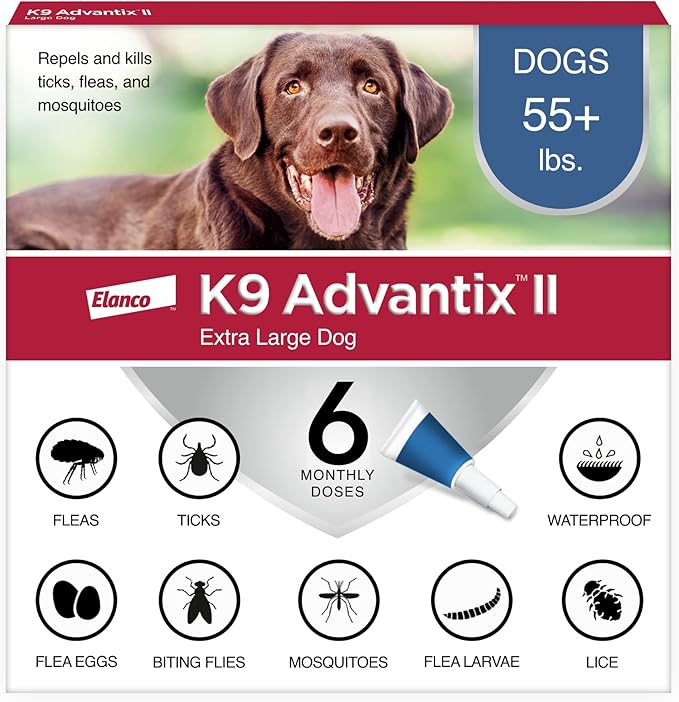
K9 Advantix II (Flea & Tick Prevention)
Imidacloprid 8.80% Permethrin* 44.00% Pyriproxyfen 0.44% Other Ingredients 46.76%.
K9 Advantix II protects extra-large dogs from fleas, ticks, mosquitoes, biting flies, and lice. It kills and repels pests fast, is easy to apply, waterproof, and offers monthly, prescription-free protection.
These products can be used as part of your dog’s regular health routine to keep ticks away all year long.
What To Do If You Find a Tick on Your Dog
Tick removal should be done carefully to avoid leaving the mouthparts behind. Here’s the simplest method:
- Use fine-tip tweezers.
- Grab the tick close to the skin.
- Pull upward steadily without twisting.
- Clean the bite area with mild antiseptic.
- Save the tick in a sealed plastic bag for your vet to identify if needed.
Never use methods like burning the tick or applying oils—they can worsen the situation.
When It’s Time to See a Vet Immediately
Call your veterinarian if:
- Your dog suddenly becomes tired or feverish after a tick bite.
- You see unusual red spots or bruising on the skin.
- Your dog begins limping or refuses to eat.
- Symptoms worsen even after removing a tick.
Fast action can make a big difference in preventing complications.
Conclusion
Rocky Mountain Spotted Fever in dogs can sound alarming, but with awareness and the right prevention steps, it’s a manageable risk. The key is early detection—watch for changes in your dog’s energy, appetite, and behavior, especially after time outdoors. If you ever suspect RMSF, getting a quick checkup from your vet can protect your dog from serious complications.
With consistent tick prevention and simple daily habits, you can keep your dog safe, healthy, and ready for every outdoor adventure. For more pet health guides, product recommendations, and helpful tips, feel free to explore additional resources anytime.








Extra Deals & Recommendations From Our Partners
Discover exclusive offers, tools, and products from brands we collaborate with.


Grizzly Salmon Oil for Cats
Made from wild Alaskan salmon, Grizzly Omega Health provides cleaner, nutrient-rich omega-3s with high DHA and EPA to support your pet’s skin, coat, cognition, vision, and immune health. Wild salmon offers fewer calories and more omega-3s than farmed fish, making this supplement a powerful choice for overall wellness and healthy nerve-based functions, including fertility.

Fish Tank, 2.4 Gallon Fish Aquarium
This smart 2.4-gallon multi-functional aquarium combines a self-circulating 3-in-1 filtration pump, ultra-quiet oxygenation, and adjustable 7-color LED lighting for a relaxing display. Made with ultra-clear HD glass, it features a real-time temperature display, feeding port lid, decorative plants, and a built-in aromatherapy humidifier with three spray modes to enhance mood, reduce stress, and create a soothing indoor environment.

PETKIT Ultra Quiet Smart Water Fountain
The upgraded cat water fountain uses a safer wireless 3.0 pump with foam filtering to extend pump life. A separable tank and base make refilling and cleaning easy. PETKIT Filter 3.0 offers better filtration, while dry-burn protection stops the pump when water is low. An indicator light alerts you to refill, and the quiet gushing flow encourages pets to drink more.

Royal Canin Canine Care Nutrition
Royal Canin Digestive Care Wet Dog Food supports healthy digestion for adult dogs with sensitive stomachs. Highly digestible formula helps promote balanced gut flora, optimal stool quality, and overall well-being.

Amazon Basics Cat Scratcher – Indoor Classic Single Cat
This cat scratching post gives your feline a dedicated place to sharpen claws and maintain healthy nails. Made with natural jute fiber, it offers an ideal scratching surface while the sturdy base helps prevent tipping. It includes a replaceable dangling toy for added fun and helps redirect scratching away from furniture and carpets. Perfect for everyday use and easy to spot clean.

Kurgo Dog Car Seat Belt Tether + Harness
The Kurgo Auto Zip Line keeps your dog safely secured in the backseat while allowing controlled freedom during car rides. It installs easily between two fixed points in most vehicles and includes a tether that can double as a short lead. Built with durable steel hardware and rugged materials, it’s designed for real-world travel and backed by Kurgo’s lifetime warranty.

Best Pet Supplies Voyager Step-in Air Harness
This lightweight step-in vest harness offers a secure and comfortable fit when sized using the provided measurement guide, as sizing does not correspond to breed or weight and is not suitable for large dogs. Made from soft, breathable air mesh, it’s fast-drying and comfortable year-round. Reflective bands improve visibility in low light, while triple security—hook and loop closure, sturdy buckle, and double D-rings—keeps your pet safe. Easy to put on for stress-free walks.

PetSafe Viva Pet Fountain
The PetSafe Viva Pet Fountain encourages healthy hydration with a flowing design and double filtration for cleaner water. Made from BPA-free plastic and stainless steel, it features an LED water level indicator and auto-shutoff. Easy to clean and dishwasher safe, PetSafe delivers vet-recommended quality backed by 25 years of trusted innovation.