


Best Bedding for Rabbits: Complete Guide to Safe and Comfortable Options in 2026
By PawHappiness Team | Updated | 6 minutes read | Products & Reviews

Table of Contents
Rabbits need proper bedding in their living space to stay comfortable and healthy. The right bedding absorbs urine, controls odors, and gives rabbits a soft place to rest. Good bedding also protects their sensitive feet and helps maintain a clean environment.
Different types of bedding work better for rabbits than others because some materials can cause respiratory problems or digestive issues if eaten. Paper-based bedding is popular because it’s absorbent and low in dust. Wood shavings can work well too, but certain types like cedar and pine contain oils that harm rabbits. Hay makes excellent bedding since rabbits can eat it safely, though it needs frequent changing. Some rabbit owners prefer fleece liners because they’re reusable and eco-friendly.
The main things to consider when choosing rabbit bedding are safety, absorbency, and dust levels. Materials should be non-toxic since rabbits often nibble their bedding. High absorbency keeps the cage dry and reduces smell between cleanings. Low dust content protects your rabbit’s lungs from irritation. I spent significant time researching and evaluating different bedding options to identify the ones that keep rabbits safe, comfortable, and healthy.
Best Bedding for Rabbits
I’ve tested and researched various bedding options to find the best choices for your rabbit’s comfort and health. My top picks below offer good absorption, odor control, and safety for rabbits of all sizes.
Kaytee Clean & Cozy White Paper Bedding
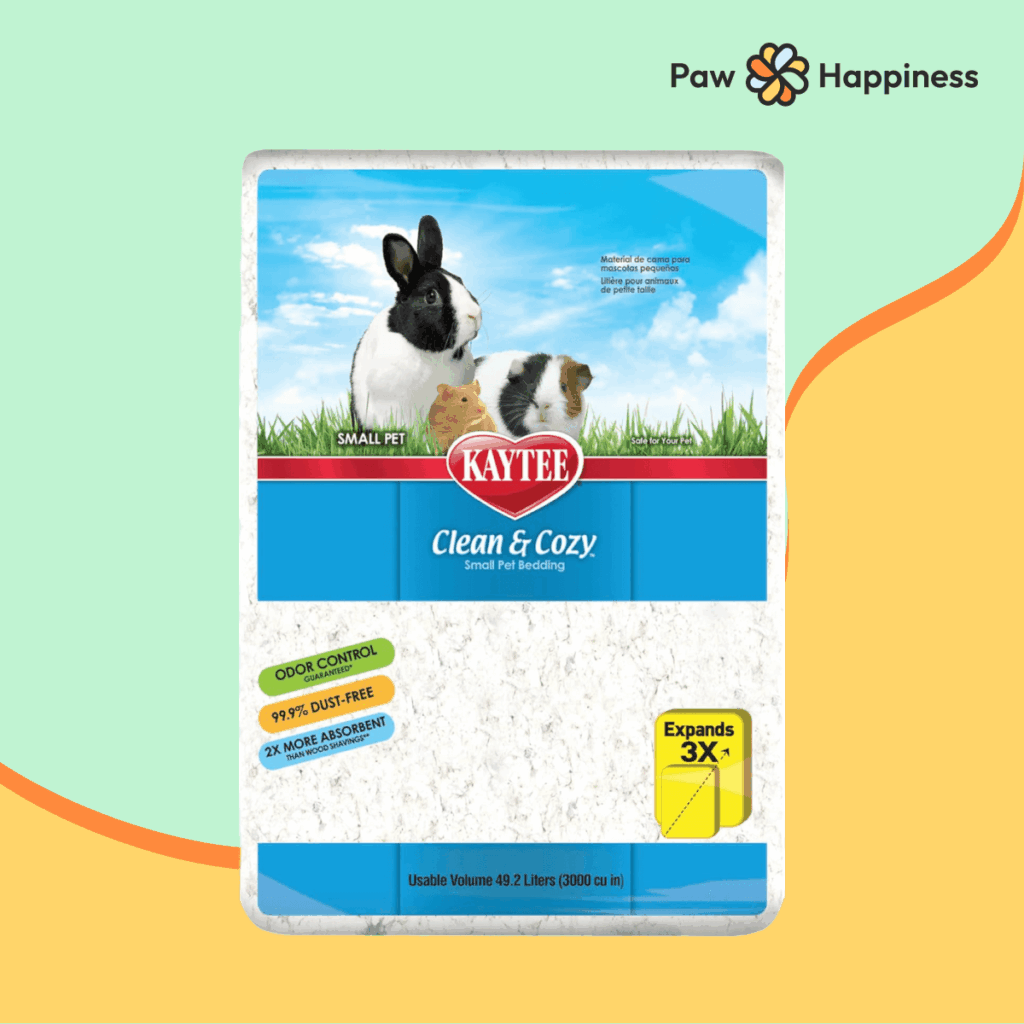
This bedding offers excellent value with strong odor control and softness, though occasional quality inconsistencies can occur between shipments.
Pros
- Absorbs moisture exceptionally well and keeps the habitat dry for days between cleanings
- Creates minimal dust compared to wood shavings, making it easier to breathe around the cage
- Soft texture that rabbits enjoy burrowing and nesting in
Cons
- Quality varies from bag to bag with some containing more compressed material than others
- The white color shows dirt and soiling quickly, requiring more frequent spot cleaning
- Large bags can be difficult to store if you have limited space
I found this bedding to be remarkably absorbent when I used it for my rabbit’s litter area. The material soaked up urine efficiently and prevented that strong ammonia smell from building up. My rabbit seemed comfortable digging and rearranging it throughout the day.
The dust-free claim holds up well in practice. I didn’t notice much floating in the air when pouring it into the cage. This made a real difference compared to wood shavings that always left me sneezing.
The 49.2 liter bag covers a good amount of space. I could fill my rabbit’s enclosure about two inches deep and still have bedding left over. It fluffs up nicely once you break apart the compressed sections.
One thing I noticed was the consistency changed slightly between purchases. Some bags felt fluffier while others seemed more packed down. The bedding still worked fine, but the texture wasn’t always identical.
Cleaning up used bedding was straightforward since the paper material doesn’t stick to surfaces. I appreciated that it’s safe if my rabbit nibbled on it occasionally. The lack of added fragrances meant no artificial smells competing with my rabbit’s natural scent.
Carefresh White Paper Bedding
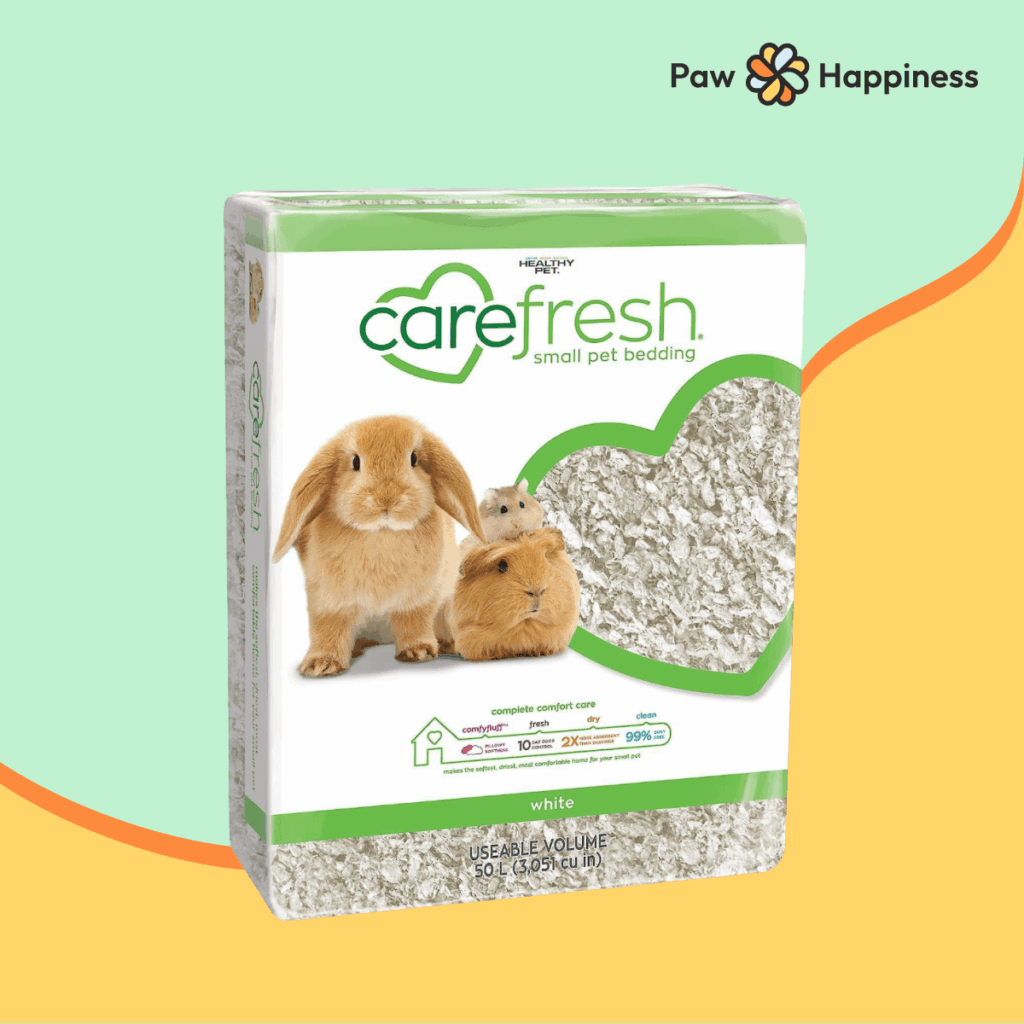
This bedding delivers solid odor control and a dust-free environment, making it a reliable choice for rabbit owners who want to keep their pet’s space clean and comfortable.
Pros
- Keeps the cage remarkably free from dust, which helped my rabbit breathe easier
- Absorbs moisture quickly and keeps wet spots from spreading across the entire cage
- Lasts about 10 days before needing a full change when I spot-clean daily
Cons
- Costs more than wood shavings, which adds up when buying regularly
- Clumps together when wet instead of staying loose like some other beddings
- Goes through the 50-liter bag faster than expected with a larger rabbit setup
I switched to this bedding after trying several wood-based options, and the difference in air quality was immediate. My rabbit’s area stays noticeably cleaner between changes.
The white color makes it easy to spot which areas need attention during daily cleaning. I just scoop out the soiled sections and add fresh bedding to those spots. The material feels soft when I handle it, and my rabbit seems comfortable burrowing into it.
The odor control really does work for about a week and a half with regular spot cleaning. After that point, I notice ammonia smells starting to break through. The bedding absorbs urine well enough that I don’t see wet patches spreading to clean areas, which saves me from having to change everything as often.
Cleanup is straightforward since the material breaks down and can go in compost. I appreciate not having sticky wood shavings clinging to the cage bars. The dust-free claim holds up in my experience, as I haven’t dealt with the sneezing issues that came with my previous bedding choices.
Small Pet Select Rose Paper Bedding
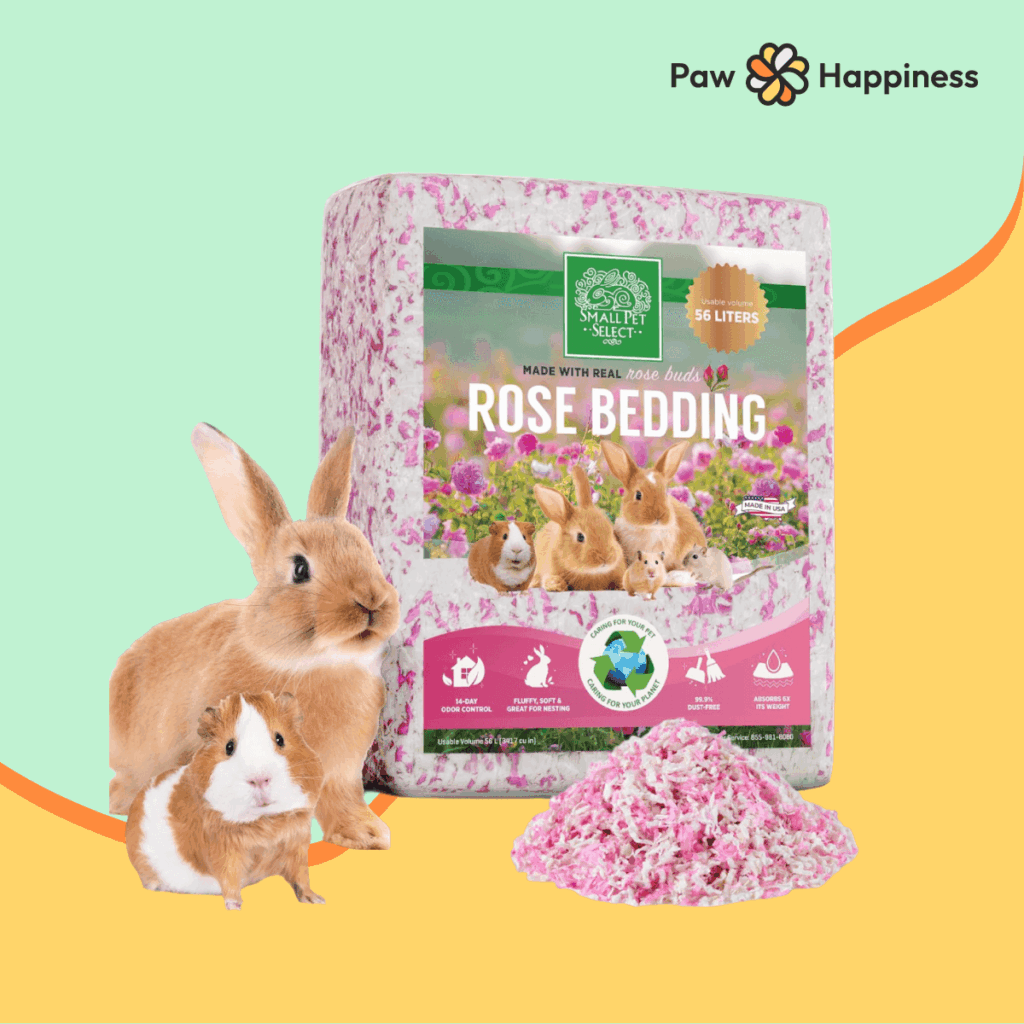
This bedding works well if you want a natural option that controls odors, though the rose scent might be stronger than you expect.
Pros
- Controls odors better than basic paper bedding while keeping the cage fresh between cleanings
- Soft texture creates comfortable nesting spots that rabbits actually use and burrow into
- Dust-free formula keeps the air clean and doesn’t irritate sensitive respiratory systems
Cons
- Rose scent can be overwhelming at first, especially in smaller spaces
- Costs more than plain paper bedding options, making it a special occasion purchase for some budgets
- Contains fewer actual rose petals than the packaging might suggest
I found the Small Pet Select Rose Paper Bedding to be genuinely soft when I pulled it from the bag. The paper shreds feel fluffy and unbleached, which gave me confidence about putting it in my rabbit’s cage. My rabbit immediately started digging and foraging through it, which told me the texture was right.
The odor control impressed me during the first few days. Urine smells stayed minimal even as the bedding absorbed moisture. The rose scent is noticeable when you first open the bag, and it does linger in the room for a while.
One 56-liter bag gave me enough bedding to fill a standard rabbit cage with a thick layer. My rabbit could burrow deeply, which she clearly enjoyed. The bedding stayed relatively clean-looking since you can easily spot soiled areas against the white background.
The price makes this more of a treat than an everyday option for my budget. I mix it with cheaper bedding sometimes to make it last longer. The dust-free claim held up well, as I didn’t notice particles floating around when I poured it into the cage.
Buying Guide
When I shop for rabbit bedding, I start by checking the material. The bedding should be dust-free to protect my rabbit’s respiratory system. Paper-based options are usually safer than wood shavings because some wood types contain harmful oils.
Absorbency and Odor Control
I always look at how well the bedding absorbs moisture. Good absorbency keeps my rabbit dry and comfortable. The bedding should also control odors without using artificial fragrances, which can irritate my rabbit’s sensitive nose.
Safety Features
I check that the bedding is non-toxic and free from chemicals. My rabbit might chew or eat small amounts, so the material needs to be digestible or safe to pass through their system. I avoid bedding with sharp pieces that could hurt my rabbit’s feet.
Practical Considerations
| Feature | What I Look For |
|---|---|
| Texture | Soft enough for comfort but firm enough to stay in place |
| Dust Level | Low or dust-free to prevent breathing problems |
| Price | Cost per use, not just package price |
| Availability | Easy to find for regular replacement |
I consider how easy the bedding is to clean. Some materials clump when wet, which makes spot cleaning simpler. I also think about how much bedding I need for my cage size. Buying in bulk can save money if I have storage space.
The weight matters too. Lighter bedding is easier to carry and pour, but it might scatter more when my rabbit digs.
Frequently Asked Questions
Rabbit owners often wonder about the safest bedding materials, proper cleaning schedules, and whether recycled paper products work well for their pets.
What materials are safe and comfortable for rabbit bedding?


I recommend paper-based bedding, aspen shavings, and hay as the safest options for rabbits. These materials are absorbent and don’t contain harmful chemicals or oils that can irritate your rabbit’s respiratory system.
Paper-based bedding is soft on rabbit feet and highly absorbent. Aspen shavings are another good choice because they’re free from the aromatic oils found in cedar and pine that can harm rabbits.
I never use cedar or pine shavings because they contain phenols that can damage your rabbit’s liver and lungs. Straw can work as bedding, but it’s less absorbent than other options and may contain sharp pieces.
Hay serves a dual purpose as both food and bedding. Your rabbit can eat it while also having a comfortable surface to rest on.
How often should I change my rabbit’s bedding to maintain a healthy environment?
I spot-clean my rabbit’s bedding daily by removing soiled areas and droppings. This keeps the cage fresh and prevents bacteria buildup between full changes.
I do a complete bedding change once or twice per week depending on the cage size and number of rabbits. Smaller cages need more frequent changes because waste accumulates faster in limited space.
I check the bedding daily for dampness and odor. If I notice strong smells or wet spots before my scheduled change day, I replace the bedding immediately.
Can I use recycled paper bedding for my rabbit, and what are its benefits or drawbacks?
I use recycled paper bedding because it’s safe, absorbent, and environmentally friendly. This type of bedding is made from processed paper products that are dust-free and gentle on rabbit respiratory systems.
The main benefits include excellent odor control and high absorbency. Recycled paper bedding is also virtually dust-free, which helps rabbits with sensitive respiratory tracts.
The main drawback is cost. Recycled paper bedding typically costs more than other options like aspen shavings or hay.
I find that recycled paper bedding lasts longer between changes because of its superior absorbency. This can offset the higher initial cost over time.
Related Articles






Extra Deals & Recommendations From Our Partners
Discover exclusive offers, tools, and products from brands we collaborate with.


IRIS USA Large Hooded Litter Box — Best for Odor Control
This enclosed litter box keeps odors contained with an easy-access flap door that prevents spills and messes. The spacious 9.25" x 9" opening gives cats privacy and comfort. A sturdy handle and secure buckles make transport simple, while the included scoop hangs neatly under the hood for quick access. Measuring 21" x 18.75" x 17", it offers ample room for small to medium cats.

TickCheck Tick Remover Spoon
Lightweight tick removal kit with three spoons featuring deep notches for safely removing ticks from people or pets. University-tested for effective removal of adult and nymph ticks. Includes a waterproof tick ID card and a carabiner clip for travel and outdoor use. Fast removal helps reduce the risk of tick-borne issues like Lyme. Perfect for hiking and everyday carry.

Bseen LED Dog Collar USB Rechargeable Collar
Adjustable, rechargeable LED dog collar with 3 light modes and 360° visibility for safe, easy nighttime walks.

Bedsure Calming Dog Bed Medium Size Dog
Calming, plush donut dog bed with extra-soft faux fur and raised rim for secure, comfortable sleep.

KONG Puppy Toy for Stress Relief
The KONG Ring is a durable chew toy made from KONG’s natural red rubber, designed for long-lasting chewing sessions. Its added nubs enhance the chewing experience while helping clean teeth and support healthy gums. This toy provides enrichment, satisfies natural chewing instincts, and encourages healthy chewing habits.

Nature’s Miracle Cat Calming Spray, 8 Ounces, Stress-Reducing Formula for Cats
Nature’s Miracle Calming Spray uses soothing, natural scents to help reduce anxiety in cats. Ideal for easing stress from routine changes, travel, or separation, it helps skittish cats feel secure and relaxed—without sedatives. The comforting scent creates a sense of safety, making it easier for your cat to stay calm in stressful situations.

Snoozer Luxury Console Car Seat
This center-console dog car seat is designed for small pets up to 9 lbs, featuring side safety hooks and adjustable bottom straps for a secure, no-slip fit. Made from waterproof PU leather with plush rabbit-velvet lining, it includes a harness hook, shoulder straps, storage pocket, and a reversible washable cushion. Its elevated design gives anxious pets a calming window view during travel.

NaturVet – ArthriSoothe-Gold Advanced Care Liquid
Liquid joint supplement for dogs & cats with glucosamine, MSM, chondroitin,and antioxidants to support mobility, cartilage health, and joint comfort. Vet-approved, made in the USA.