


Best Cat Shampoo for Clean and Healthy Fur in 2026
By PawHappiness Team | Updated | 5 minutes read | Products & Reviews
Table of Contents
Cats are naturally good at keeping themselves clean, but sometimes they need a bath. Outdoor cats can get dirty or sticky substances in their fur. Indoor cats might develop skin conditions or need help with odors.
Cat shampoo is specially formulated to work with a cat’s sensitive skin and unique pH balance, which is different from human skin. Regular human shampoo can dry out cat skin and cause irritation. A good cat shampoo cleans the coat while being gentle enough not to strip away natural oils. Some formulas target specific issues like fleas, dandruff, or allergies.
The most important thing to look for is whether the shampoo is safe if your cat licks their fur after bathing. Cats groom themselves constantly, so ingredients matter. You should also consider your cat’s specific needs, like whether they have sensitive skin or a flea problem. We researched and tested multiple cat shampoos to find the ones that clean effectively while keeping cats safe and comfortable.
Best Cat Shampoos
We tested dozens of cat shampoos to find the ones that clean effectively while being gentle on sensitive skin. Our top picks include options for different needs, from everyday cleaning to special treatments for fleas and dry skin.
Burt’s Bees Hypoallergenic Cat Shampoo
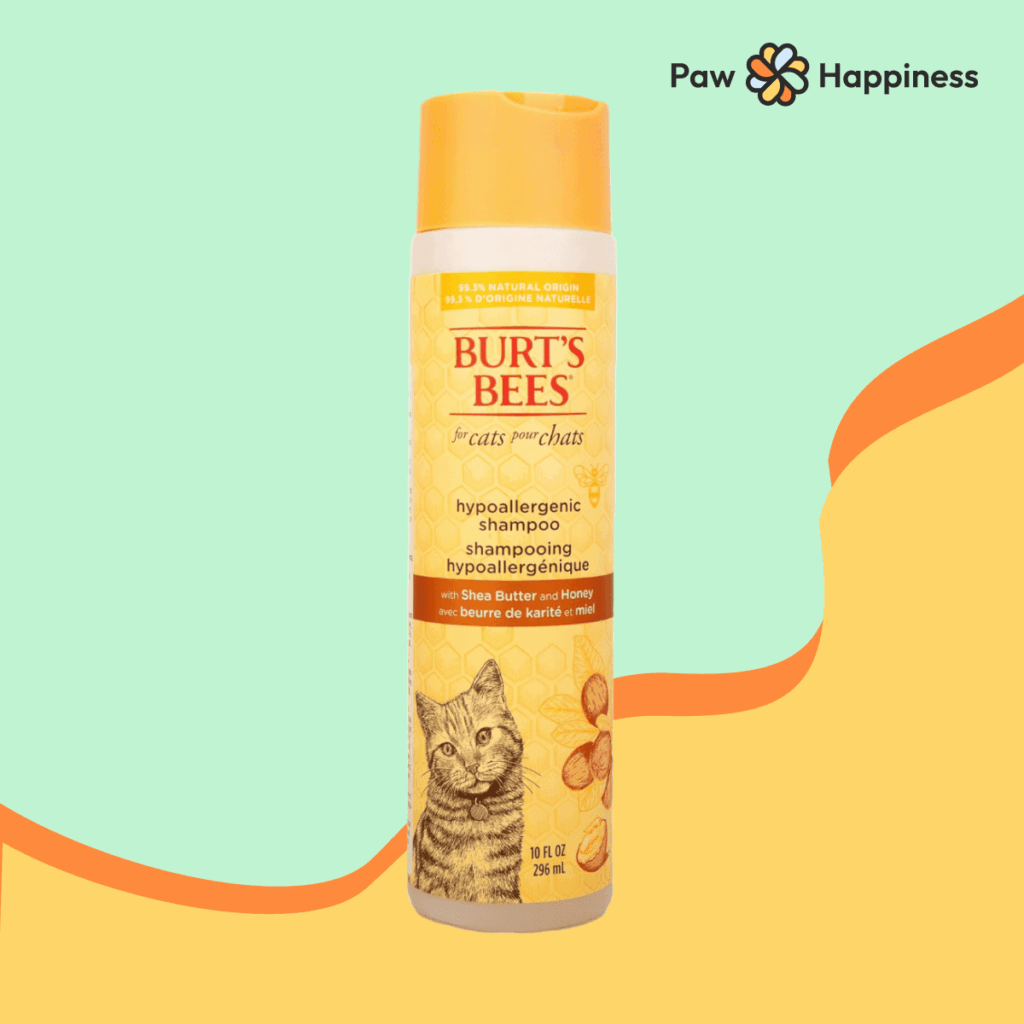
This shampoo works well for cats with sensitive or dry skin and uses natural ingredients, though its thin texture takes some getting used to.
Pros
- Effectively soothes dry, itchy skin without harsh chemicals or strong fragrances
- Makes cats’ coats noticeably soft and fluffy after bathing
- Rinses out easily despite producing minimal lather
Cons
- Watery consistency means you need to shake it well before each use
- Lacks the sweet honey scent you might expect from the ingredients
- Low lather can feel strange if you’re used to conventional shampoos
We found this shampoo particularly helpful when dealing with cats that have skin sensitivities. The formula doesn’t produce much foam, which initially seemed odd, but it actually rinses out faster than traditional shampoos. Our cat’s coat felt incredibly soft after drying.
The thin, almost watery texture requires a good shake before applying. We learned to pour it carefully to avoid wasting product. Despite the runny consistency, a small amount goes a long way in cleaning the entire coat.
The hypoallergenic formula lived up to its claims during our testing. We used it on a cat prone to skin reactions, and there were no issues with irritation or dryness afterward. The lack of artificial fragrance means your cat won’t smell perfumed, just clean.
We appreciated that this shampoo contains shea butter and honey for conditioning. The coat looked healthier and shinier within a few uses. It worked especially well for regular maintenance baths every month or so.
Breezytail PetO’Cera Cat Shampoo
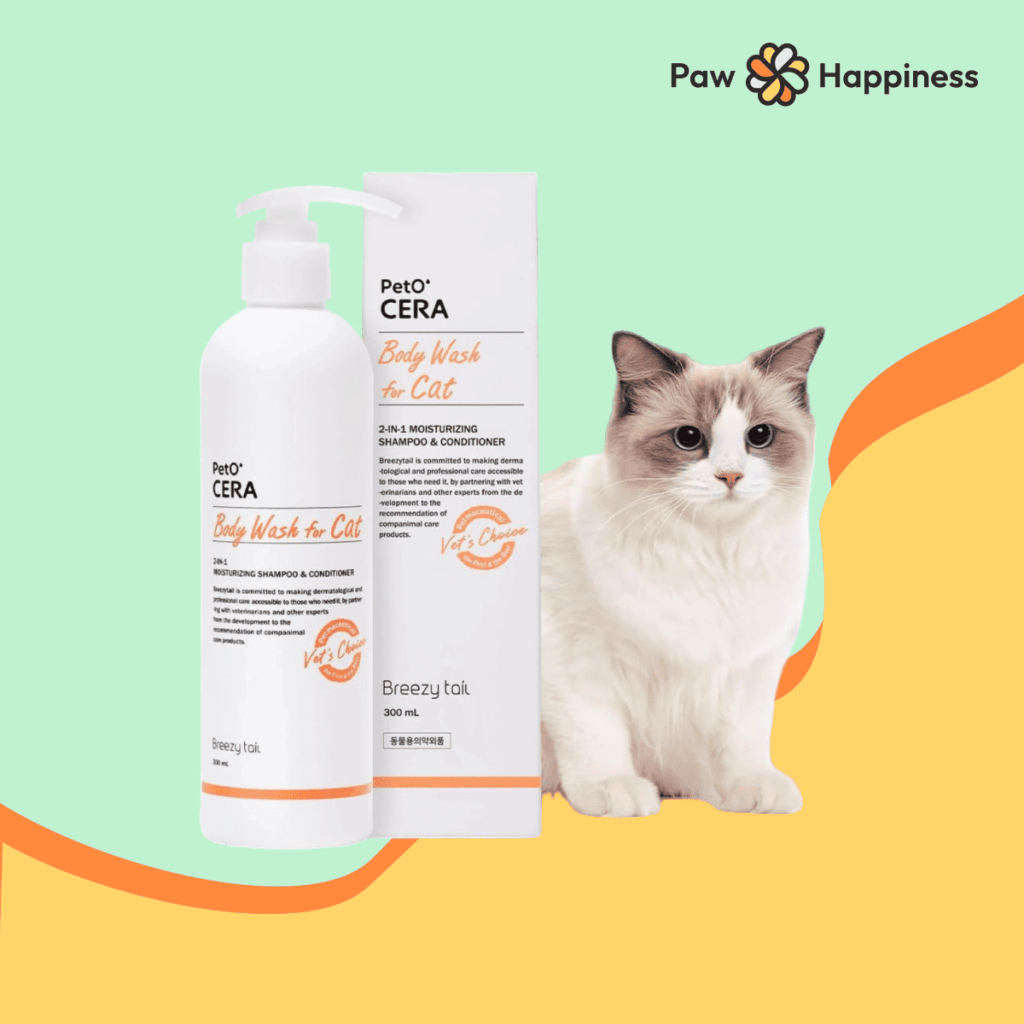
This shampoo delivers soft, clean fur with a gentle formula that works well for cats with sensitive skin.
Pros
- Makes fur noticeably softer and fluffier after just one wash
- Rinses out quickly without leaving residue behind
- Subtle scent that doesn’t bother cats during bath time
Cons
- The pump dispenser can be difficult to get working properly
- Higher price point compared to basic cat shampoos
- Gel texture requires a bit more effort to lather than liquid formulas
We used this shampoo on our cat last week and noticed the difference right away. The gel formula took a moment to work into a lather, but once it did, it spread easily through the fur. Our cat stayed calm during the bath, which we think had something to do with the mild scent.
The rinse phase went faster than we expected. We didn’t need to spend extra time making sure all the product was out. After towel drying, the fur felt incredibly soft to the touch.
Our cat’s coat looked healthier within a few days. The shine improved and the texture stayed fluffy for over a week. We also noticed our cat seemed more comfortable and scratched less than usual.
The bottle pump gave us some trouble at first. It wouldn’t pop up on its own, so we had to pull it up manually each time. This didn’t stop us from using the product, but it added an extra step to bath time.
Mooncat Waterless Cat Shampoo
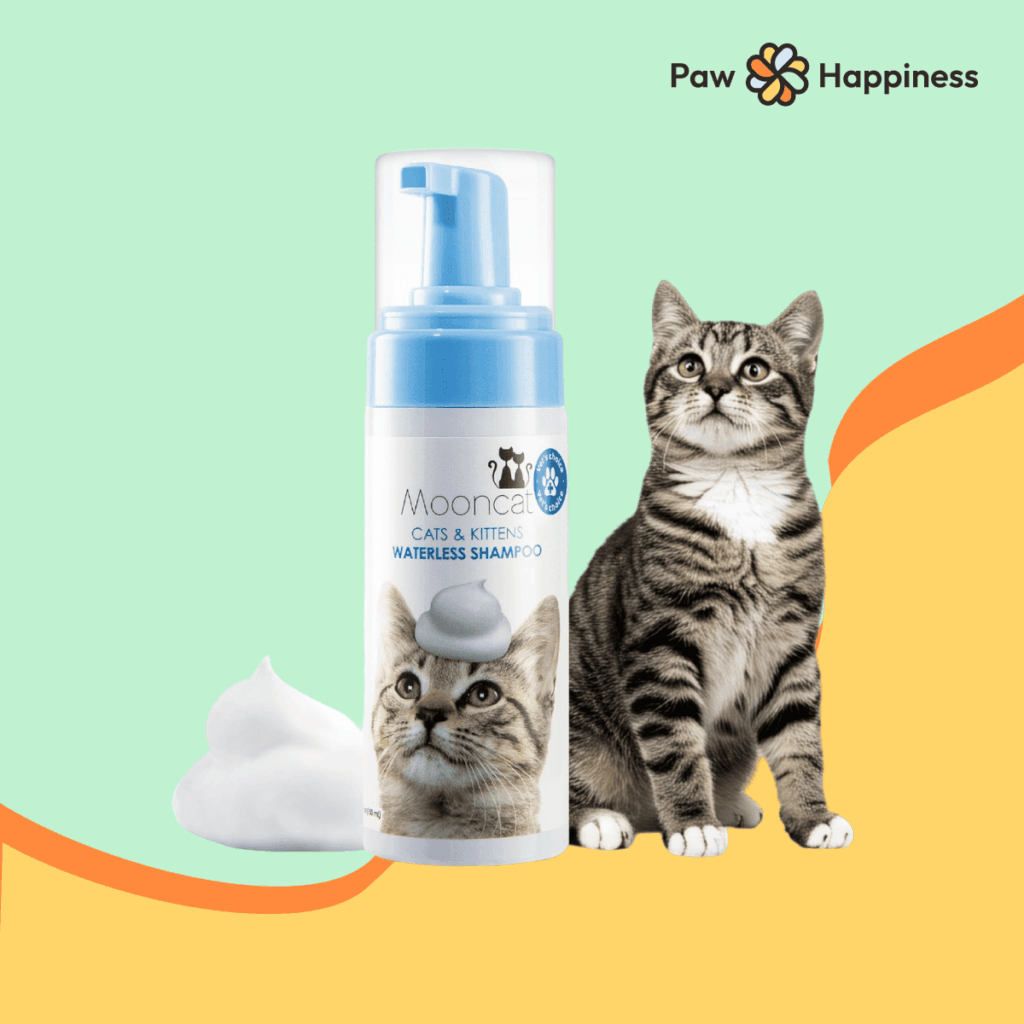
This foam shampoo works well for cats who hate traditional baths and need quick cleaning between full washes.
Pros
- Works without water or rinsing, which keeps cats calmer during grooming
- Uses natural ingredients that are safe if your cat licks their fur
- Comes in a convenient foam that’s easy to apply and massage into fur
Cons
- The perfume scent can be strong when you first open the bottle
- May leave fur feeling slightly stiff or crunchy on some cats
- Doesn’t replace a full bath for heavily soiled cats
We tested the Mooncat Waterless Cat Shampoo on both young and senior cats. The foam comes out easily from the pump bottle. You just apply one or two pumps directly onto your cat’s coat and work it in with your fingers.
The best part is how much calmer our cats stayed compared to regular bath time. There’s no water running or wet fur to deal with. We just massaged the foam in, wiped everything down with a towel, and were done in minutes.
The cleaning power is decent for light dirt and odors. We noticed it helped reduce dander and left the fur softer. However, cats with serious dirt or oily buildup still needed a proper bath. This product works better as a maintenance cleaner between full washes.
The smell is quite strong at first. It has a perfume-like scent that some people might find too much. The good news is it fades after a few hours on the cat’s fur.
We did notice the fur felt a bit stiff on one of our cats after it dried. Brushing helped fix this problem. The Mooncat Waterless Cat Shampoo contains plant-based ingredients and no harsh chemicals, which gives us peace of mind when our cats groom themselves.
Buying Guide
When we shop for cat shampoo, we need to think about our cat’s specific needs first. Different cats require different types of shampoo based on their coat, skin condition, and any health issues they might have.
Key Ingredients to Consider
We should always check the ingredient list before buying. Natural ingredients like oatmeal, aloe vera, and coconut oil are gentle on cat skin. Avoid products with harsh chemicals, artificial fragrances, or sulfates that can irritate sensitive skin.
Cats with skin conditions may need medicated formulas. Look for ingredients that target specific issues like dryness, flakiness, or excessive oiliness.
Formula Types
| Formula Type | Best For |
|---|---|
| Waterless | Cats who hate water or quick cleanups |
| Traditional | Deep cleaning and full baths |
| Hypoallergenic | Cats with allergies or sensitive skin |
| Medicated | Specific skin conditions or vet-recommended treatment |
pH Balance Matters
Cat skin has a different pH level than human skin. We need to choose shampoos specifically formulated for cats with a pH between 6 and 7. Using human shampoo or dog shampoo can damage their skin’s natural protective barrier.
Scent and Texture
Strong scents can overwhelm cats since they have a powerful sense of smell. We recommend choosing unscented or lightly scented options. The texture should be easy to apply and rinse out completely, as leftover residue can cause irritation.
Frequently Asked Questions
Cat owners often wonder about the right ingredients to use, how frequently they should bathe their pets, and whether human products are safe alternatives. Understanding proper bathing techniques and recognizing potential problems helps keep cats healthy and clean.
What ingredients should I look for in a high-quality cat shampoo?


We recommend looking for natural cleansers like coconut-based surfactants or oatmeal. These ingredients clean effectively without stripping away essential oils from your cat’s skin and coat.
Aloe vera and vitamin E provide moisture and soothe irritated skin. Avoid shampoos with artificial fragrances, parabens, sulfates, and dyes, as these can irritate sensitive feline skin.
Ingredients like tea tree oil should be avoided completely. Cats cannot metabolize this oil properly, which makes it toxic even in small amounts.
How often is it safe to bathe my cat with shampoo?
Most cats only need a bath every 4 to 6 weeks. Bathing too frequently removes natural oils that protect their skin and coat.
Indoor cats that groom themselves regularly may only need baths a few times per year. Outdoor cats or those with skin conditions might need more frequent bathing based on veterinary advice.
Long-haired breeds sometimes require more regular bathing to prevent matting. We suggest consulting with your vet to determine the best schedule for your specific cat.
What are the signs of an allergic reaction to cat shampoo?
Excessive scratching or licking after a bath indicates possible irritation or allergy. Your cat might also develop red, inflamed skin or small bumps on their body.
Hair loss in patches or overall thinning can signal an allergic response. Some cats experience swelling around their face, ears, or paws.
Behavioral changes like restlessness or hiding more than usual may accompany physical symptoms. Stop using the shampoo immediately and rinse your cat thoroughly with plain water if you notice these signs.
Can I use human shampoo on my cat, or does it need to be cat-specific?
Human shampoo is not safe for cats. Our skin has a pH level around 5.5, while cat skin has a pH between 6.2 and 7.5.
Using human shampoo disrupts the natural pH balance of your cat’s skin. This can lead to dryness, irritation, and increased vulnerability to bacteria and infections.
Cat-specific shampoos are formulated to match feline skin pH levels. They also avoid ingredients that are safe for humans but toxic to cats.
What’s the best way to introduce a cat to regular shampoos and baths?
We suggest starting when your cat is young, as kittens adapt more easily to bathing routines. Begin with short sessions that focus on positive experiences rather than complete baths.
Place a rubber mat in the sink or tub to give your cat secure footing. Use lukewarm water and speak in calm, reassuring tones throughout the process.
Reward your cat with treats immediately after each bath. Gradually increase the duration of bathing sessions as your cat becomes more comfortable with the routine.
Keep all supplies within reach before starting. This prevents you from leaving your cat unattended during the bath, which could increase their anxiety.
Related Articles



Extra Deals & Recommendations From Our Partners
Discover exclusive offers, tools, and products from brands we collaborate with.
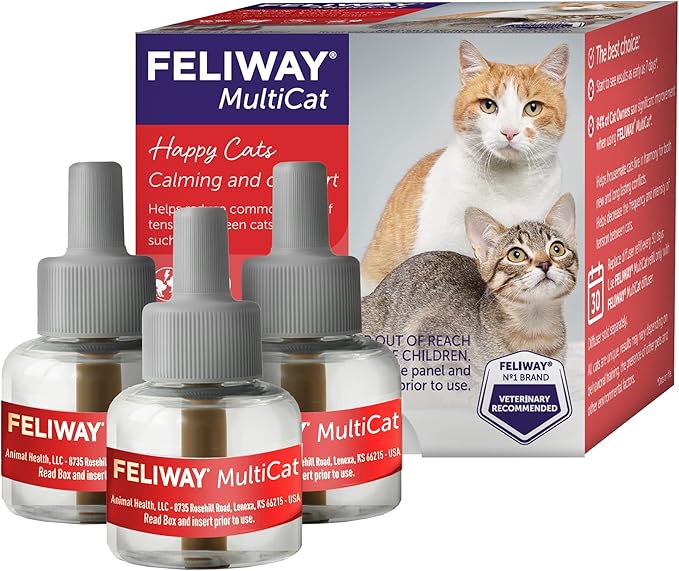

FELIWAY® MultiCat 3 x 30 Day Cat
FELIWAY MultiCat is a vet-recommended pheromone diffuser that helps reduce tension and conflict between cats, including fighting, chasing, and blocking. The drug-free formula provides up to 30 days of calming support per refill and covers up to 700 sq ft. Safe for all cats, it’s an easy, effective way to promote peace in multi-cat homes.

Automatic Cat Feeder, 4L Cat Food Dispenser
This automatic pet feeder ensures smooth, clog-free feeding with a smart food distribution system, eliminating the need for shaking or manual fixes. It features programmable meal scheduling, dual power supply for reliability, a freshness-locking design with desiccant, an anti-theft lid, and a 10-second custom voice recording to call your pet at mealtime.

Cat Toys for Indoor Cats, Retractable Wand Toy
Keep cats endlessly entertained with this interactive feather wand toy that sparks natural hunting instincts. The telescopic wand extends for wide-range play, encouraging running, jumping, and exercise. Includes multiple feather and worm attachments for variety and long-term fun. Lightweight, durable, and safe for supervised interactive play that strengthens your bond and keeps indoor cats happy.

Impact Collapsible Dog Crate
This enhanced dog crate features secure slide-bolt latches with Paw Block and locking tips for added safety. Measuring 36.6" x 21.9" x 24.5", it suits medium breeds 40–70 lbs and includes a divider panel, leak-proof pan, rubber feet, and handle. Easy to assemble without tools, it folds flat for travel. Durable construction, proper ventilation, and rounded corners ensure a safer, more comfortable den for your dog.

Loving Pets Bella Dog Bowls
A durable 27 oz stainless steel bowl with a poly-resin exterior that’s dishwasher-safe and hygienic. Includes a removable rubber base to prevent slipping and spills. Its award-winning design comes in vibrant colors and multiple sizes for dogs and cats. Vet-recommended and perfect for food or water at home or on the go.
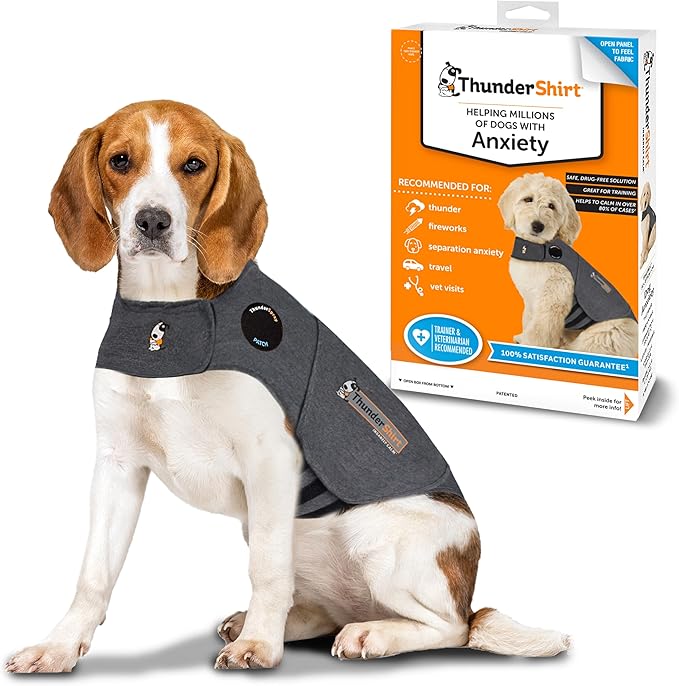
Thundershirt Classic Dog Anxiety Jacket
The ThunderShirt is a patented pressure wrap that naturally calms dogs by applying gentle, constant pressure—similar to swaddling a baby. With an 80% success rate, it helps reduce anxiety from thunder, fireworks, separation, travel, vet visits, and more. It’s easy to use, adjustable, comfortable, machine-washable, and made from soft, breathable fabric.
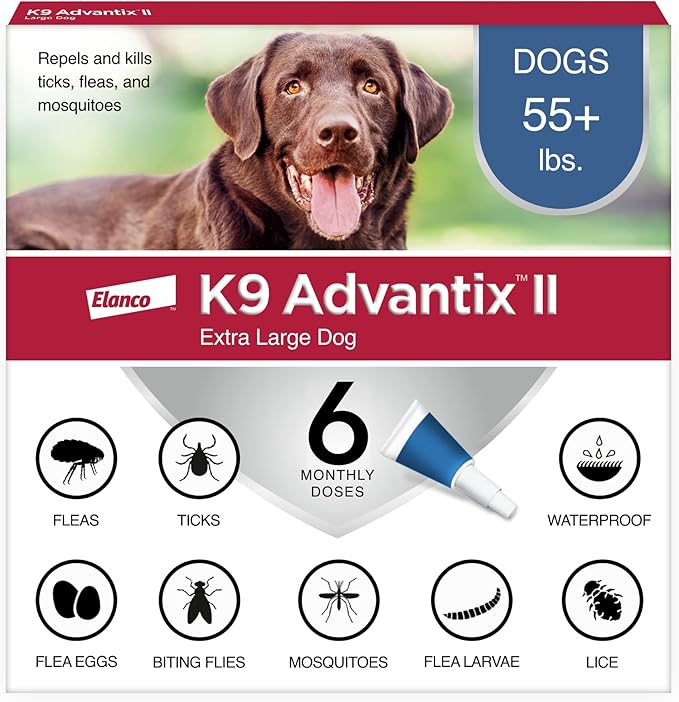
K9 Advantix II (Flea & Tick Prevention)
Imidacloprid 8.80% Permethrin* 44.00% Pyriproxyfen 0.44% Other Ingredients 46.76%.
K9 Advantix II protects extra-large dogs from fleas, ticks, mosquitoes, biting flies, and lice. It kills and repels pests fast, is easy to apply, waterproof, and offers monthly, prescription-free protection.

Blueberry Pet Essentials Dog Collar
This adjustable dog collar is designed for large dogs with neck sizes from 18”–26”, offering a secure and comfortable fit. Made from durable high-density nylon webbing, it’s built for everyday strength and long-lasting use. Featuring a classic True Navy color and eco-friendly plastic buckle, this stylish collar combines comfort, durability, and sustainability for any occasion.