


Best Dog Food for German Shepherds: Top Nutritional Choices for 2026
By PawHappiness Team | Updated | 6 minutes read | Products & Reviews
Table of Contents
German Shepherds are large, active dogs that need the right nutrition to stay healthy and strong. These dogs have specific dietary needs because of their size, energy levels, and common health issues like hip problems and sensitive stomachs. The right dog food can help your German Shepherd maintain a healthy weight, support joint health, and provide energy for their active lifestyle.
High-quality dog food for German Shepherds should contain real meat as the first ingredient, include joint-supporting nutrients like glucosamine, and be formulated for large breed dogs. The protein content matters because it helps maintain muscle mass, while fat provides energy without adding too many calories. Many German Shepherds also benefit from foods that include probiotics for digestion and omega fatty acids for coat health.
When choosing dog food for your German Shepherd, pay attention to the ingredient list and guaranteed analysis panel. Look for foods that avoid common allergens like corn, wheat, and soy if your dog has sensitivities. The kibble size should be appropriate for large breeds so your dog can chew properly. I spent weeks researching and comparing different dog foods to identify the ones that meet the nutritional needs of German Shepherds.
Best Dog Foods for German Shepherds
I’ve researched and tested many dog foods to find the best options for German Shepherds. The products below offer the right nutrition, protein levels, and ingredients that support this breed’s specific health needs.
Royal Canin German Shepherd Adult Dry Food
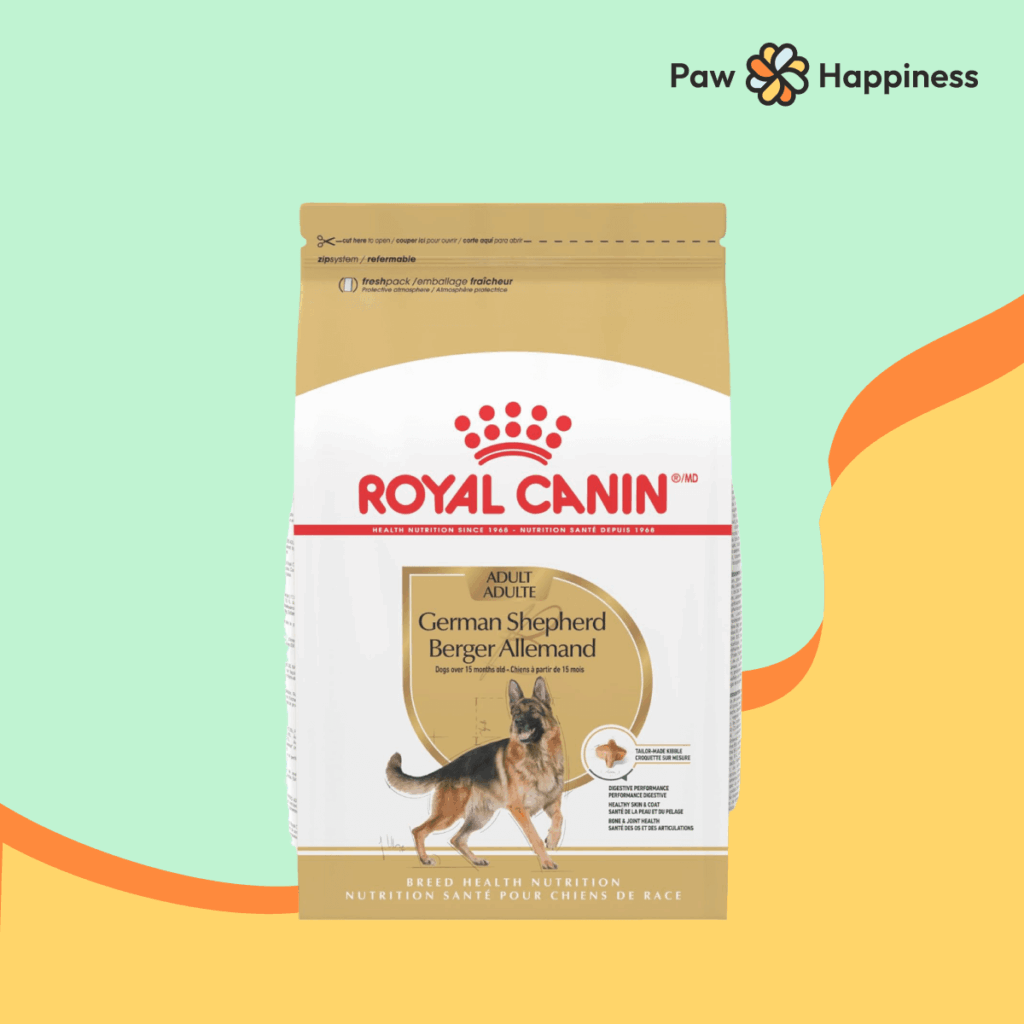
This breed-specific formula works well for German Shepherds with sensitive stomachs and delivers nutrition designed for their unique needs.
Pros
- The kibble shape fits perfectly in a German Shepherd’s long muzzle and makes eating comfortable
- My dog’s digestion improved noticeably with fewer stomach issues
- Joint support ingredients help keep large dogs moving well as they age
Cons
- The price is higher than general dog food brands
- The 30-pound bag takes up quite a bit of storage space
- Some dogs may need time to adjust to the new food
I switched to this food after my German Shepherd kept having stomach problems with other brands. The difference was clear within a week. Her digestion settled down and she stopped having the issues that worried me before.
The kibble design really does make a difference. My dog picks up each piece easily and chews it without any struggle. The texture seems to work well with how German Shepherds naturally eat.
After a few months on this food, I noticed her coat looked shinier and felt softer. The fish oil ingredients seem to be doing their job. She also seems more comfortable getting up and down, which I think comes from the glucosamine and chondroitin.
The main drawback is the cost. This food runs more expensive than regular dog food. But I’ve found it’s worth it because I’m not dealing with vet visits for digestive problems anymore. The bag is also quite large, so I had to find a good spot to store it where it stays fresh.
VICTOR Grain Free Hero
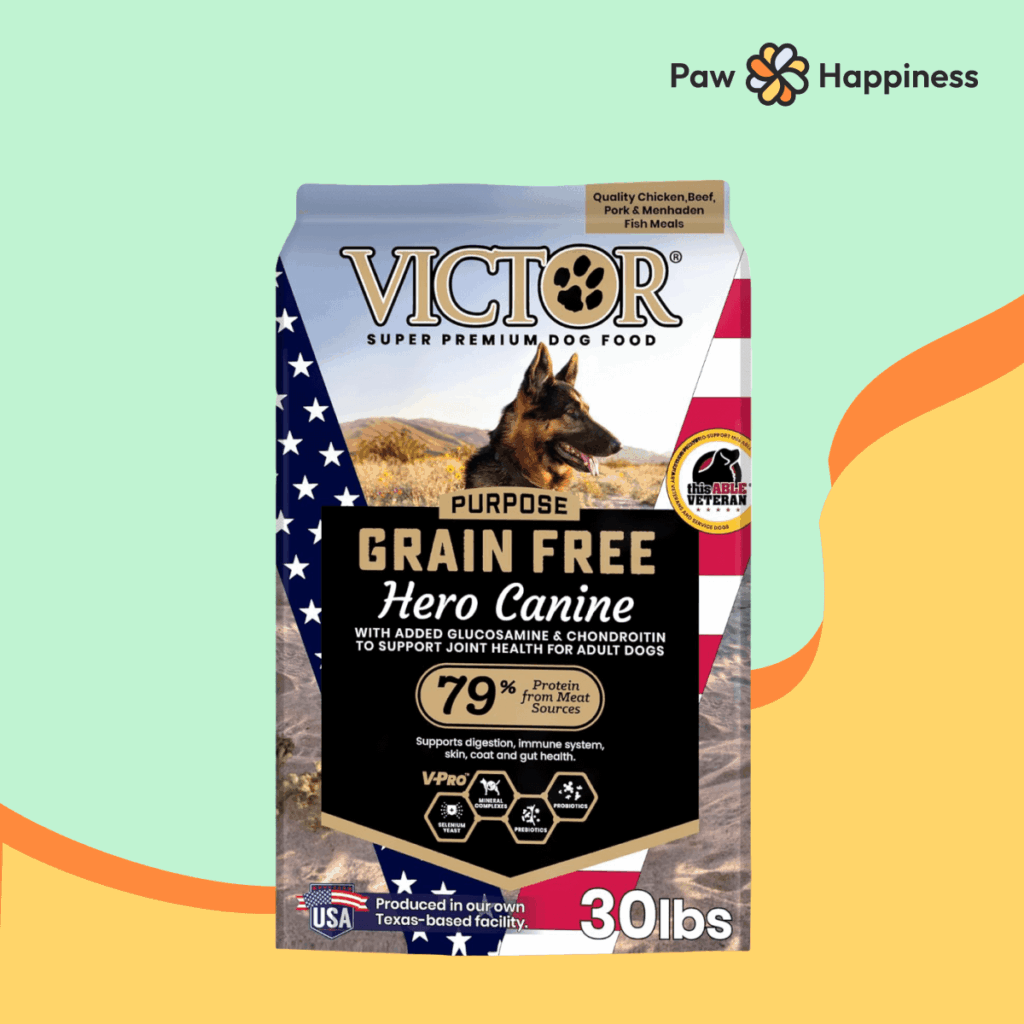
This high-protein formula works well for German Shepherds with grain sensitivities who need extra joint support.
Pros
- Contains glucosamine and chondroitin which helps protect joints as German Shepherds age
- The 33% protein content keeps active dogs energized throughout the day
- My dog’s coat became noticeably shinier after switching to this food
Cons
- The kibble pieces are quite large and might be hard for some dogs to chew
- Ships in just the bag without a protective box which can arrive damaged
- Costs more per pound than many other grain-free options
I switched to VICTOR Grain Free Hero when my German Shepherd started showing signs of grain sensitivity. The formula uses beef, fish, and pork meals as the main protein sources. After a few weeks, I noticed his digestion improved significantly.
The high protein content matches what German Shepherds need for their energy levels. My dog stays active all day without seeming tired or sluggish. The added joint support ingredients make sense for this breed since they’re prone to hip problems.
One thing that stood out was how his coat changed. It became softer and had more shine than before. He also stopped scratching as much, which was a relief.
The kibble size is bigger than most brands I’ve tried. Some dogs might need time to adjust to crunching through these pieces. I also had one bag arrive with a small tear because Amazon doesn’t box it up for shipping.
The price point sits higher than basic grain-free foods. But the ingredient quality seems worth it based on what I’ve seen. My dog enjoys the taste and finishes his bowl every meal.
WAG Freeze-Dried Beef Liver Treats
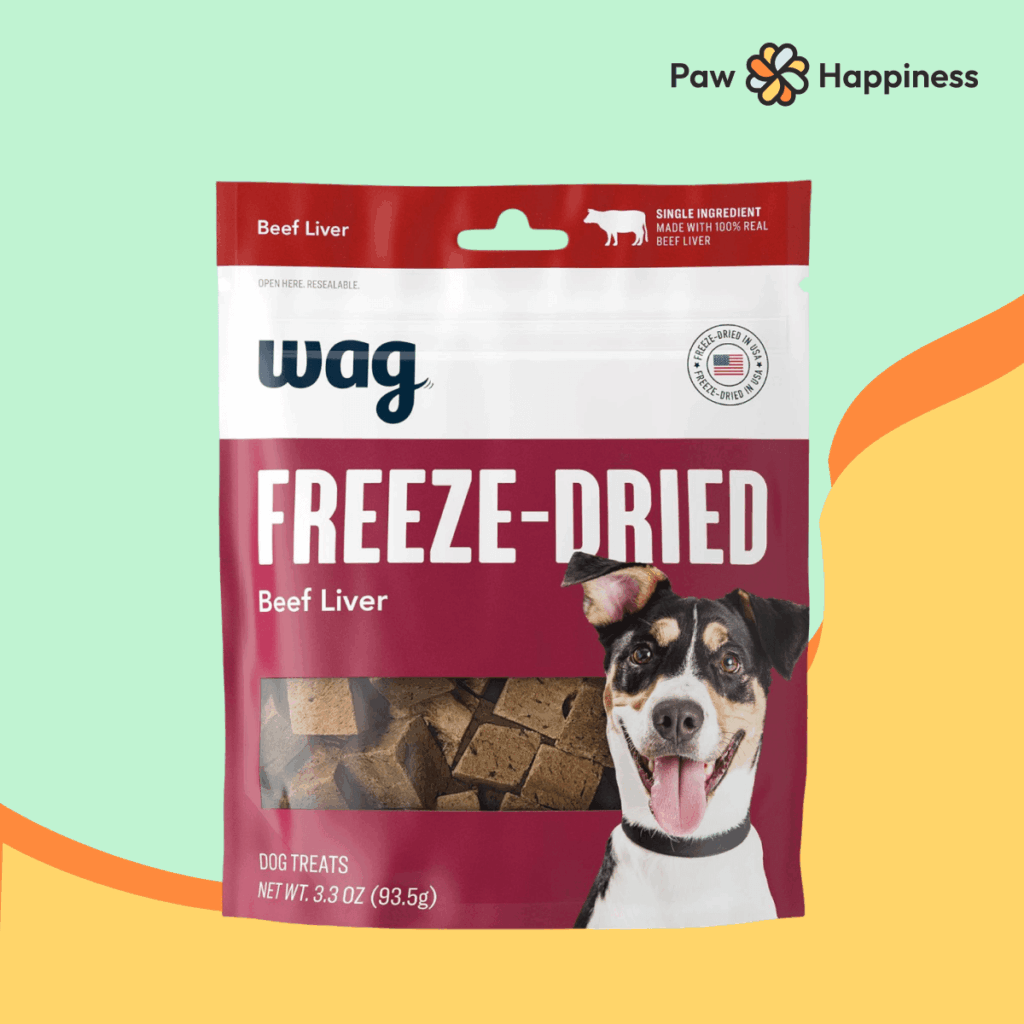
These single-ingredient treats work great for training German Shepherds and come in a convenient resealable pouch that keeps them fresh.
Pros
- Just one ingredient with no fillers or additives makes it easy on sensitive stomachs
- The freeze-dried texture breaks apart easily for different sized rewards during training
- My dog gets excited the moment I grab the bag from the cabinet
Cons
- Some batches can be a bit crumbly and create mess in your treat pouch
- The strong liver smell might be off-putting when you first open the package
- The 3.3-ounce bag runs out quickly if you use treats daily
I’ve been using these beef liver treats with my German Shepherd for a few months now. The smell is pretty intense when you open the pouch, but that’s exactly what gets my dog’s attention during training sessions. I appreciate that there’s only beef liver listed on the ingredient label.
The pieces come in different sizes, which actually works in my favor. I can break the larger chunks into smaller bits for basic commands and save the bigger pieces for more challenging tasks. My dog responds immediately to these treats, even when there are distractions around.
The resealable pouch keeps the treats from going stale between uses. I store mine in a cool spot in my pantry, and they’ve stayed fresh without any issues. The texture is dry and lightweight, making them easy to carry in my pocket during walks without leaving greasy residue.
These treats haven’t caused any digestive upset for my German Shepherd, who can be sensitive to certain ingredients. The grain-free formula seems to agree with his stomach. I use them as both training rewards and occasional toppers on his regular food to add extra protein.
Buying Guide
When I shop for German Shepherd food, I always check the protein content first. German Shepherds need at least 22-25% protein for adults and 22-28% for puppies. The first ingredient should be a named meat source like chicken, beef, or fish.
Key Nutritional Requirements
I look for these essential nutrients in any food I consider:
| Nutrient | Why It Matters |
|---|---|
| Protein | Builds and maintains muscle mass |
| Glucosamine | Supports joint health and mobility |
| Omega-3 fatty acids | Promotes healthy skin and coat |
| Fiber | Aids digestion and prevents bloating |
| Antioxidants | Supports immune system function |
Important Features to Consider
I always examine the ingredient list carefully. Whole meats, meat meals, and named fats are good signs. I avoid foods with excessive fillers like corn, wheat, or soy as the main ingredients.
The kibble size matters for German Shepherds. I prefer medium to large pieces that encourage chewing and slow down eating. This helps reduce the risk of bloating, which is a serious concern for this breed.
I check for AAFCO approval on the label. This means the food meets basic nutritional standards. I also consider my dog’s age, activity level, and any health issues when choosing food.
Price per serving is more useful than bag price when I compare options. A higher-quality food often requires smaller portions, which can balance out the cost. I calculate the daily feeding cost to make fair comparisons.
Frequently Asked Questions
German Shepherds need at least 18-22% protein in their diet, with grain-free options being unnecessary for most dogs unless they have specific allergies.
What nutritional requirements are specific to German Shepherds for optimal health?


German Shepherds need a balanced diet that supports their large, active bodies. I recommend foods with glucosamine and chondroitin to protect their joints, which are prone to hip and elbow dysplasia.
These dogs also need omega-3 fatty acids for their skin and coat health. Their food should contain appropriate levels of calcium and phosphorus to support bone health without causing skeletal issues during growth.
German Shepherds benefit from foods with added probiotics for digestive health. Many of these dogs have sensitive stomachs, so easily digestible ingredients are important.
How much protein should a German Shepherd’s diet include for muscle maintenance and energy levels?
I recommend a minimum of 18% protein for adult German Shepherds, though 22-25% is better for active dogs. Puppies and working dogs need even more protein, around 25-30%, to support growth and high activity levels.
The protein should come from quality animal sources like chicken, beef, lamb, or fish. Plant-based proteins don’t provide the complete amino acid profile that German Shepherds need.
High protein content helps maintain their muscle mass and provides sustained energy throughout the day. I look for foods where meat is listed as the first ingredient.
Are grain-free diets beneficial for German Shepherds, and why or why not?
Grain-free diets are only beneficial if my German Shepherd has a diagnosed grain allergy, which is actually quite rare. Most dogs digest grains like rice, oats, and barley without any problems.
The FDA has investigated a possible link between grain-free diets and heart disease in dogs. These diets often replace grains with potatoes or legumes, which may interfere with taurine absorption.
I choose foods with wholesome grains unless my vet has identified a specific allergy. Grains provide valuable nutrients, fiber, and energy for German Shepherds.
Related Articles





Extra Deals & Recommendations From Our Partners
Discover exclusive offers, tools, and products from brands we collaborate with.


PETKIT Ultra Quiet Smart Water Fountain
The upgraded cat water fountain uses a safer wireless 3.0 pump with foam filtering to extend pump life. A separable tank and base make refilling and cleaning easy. PETKIT Filter 3.0 offers better filtration, while dry-burn protection stops the pump when water is low. An indicator light alerts you to refill, and the quiet gushing flow encourages pets to drink more.

Dog Treat Pouch with Training Clicker
Train like a pro with this compact dog treat pouch and clicker kit. The 5×4×2" food-grade silicone pouch holds 1.67 cups, with a small magnetic opening that prevents spills and keeps treats fresh. Easy one-hand access makes rewarding fast. Includes a versatile clicker for training any pet. The adjustable 25–47" waist belt ensures secure, worry-free use during walks or sessions.

Veterinary Formula Clinical Care Hot Spot & Itch Relief Spray
Fast-acting oatmeal and aloe shampoo quickly soothes irritated skin, reducing licking and scratching. This vet-recommended, pH-balanced formula softens the coat and helps calm hot spots from allergies, bites, or moisture. Free of parabens, soaps, and dyes, it hydrates and nourishes pets 12+ weeks. Use with the matching conditioner for complete, affordable skin relief.

Buddy Biscuits Trainers Training Bites Soft & Chewy Dog Treats, Beef, 10 oz. Bag
Buddy Training Bites are bite-sized, low-calorie dog treats made with real pork liver as the first ingredient. With only 1.5 calories per treat, they’re perfect for extended training sessions. Made in the USA with no corn, soy, artificial flavors, or preservatives, each bag includes about 500 tasty treats in recyclable packaging dogs love.
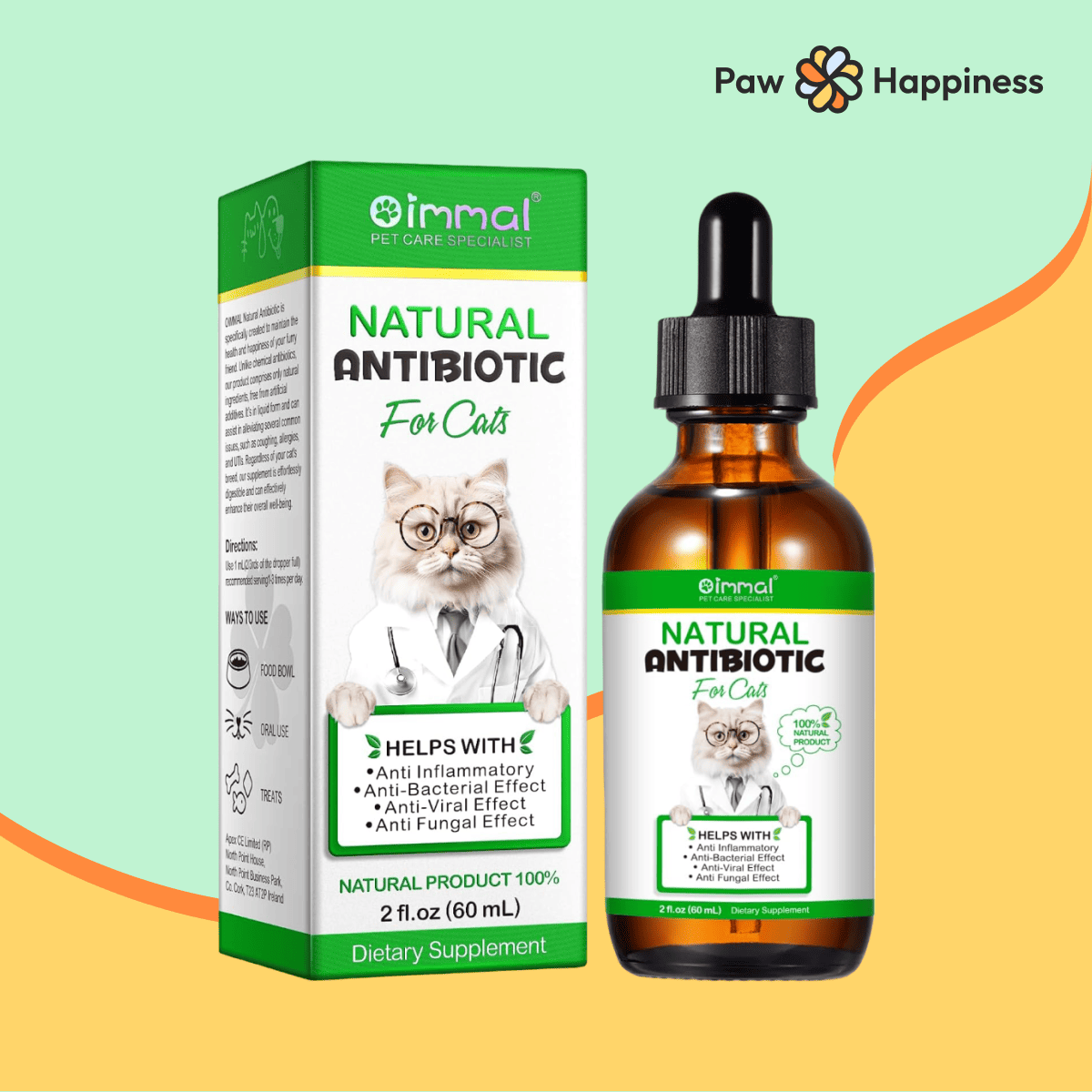
Antibiotics for Cats, Natural Antibiotic Pet
Herbal cat antibiotic drops support ear, skin, urinary, and respiratory infections with Apple Cider Vinegar, Pau D-Arco, Goldenseal & Echinacea. Non-GMO, sugar-free, fast-absorbing, safe for all cats.

Miracle Vet High-Calorie Weight Gainer
High-calorie weight gainer for dogs and cats with omega-3 fish oil and 29 vitamins & minerals to support healthy weight gain, appetite, skin, coat, energy, and overall wellness. Vet-reviewed and made in the USA.

KONG Puppy – Natural Teething Rubber Chew Toy for Dogs
The KONG Puppy toy is made with soft, natural rubber specially designed for a puppy’s developing teeth and gums. Gentle yet durable, it provides healthy chewing enrichment and a fun bounce for fetch. It can be stuffed with treats or kibble to extend playtime and support training or crate comfort. Made in the USA with globally sourced materials.

Purina Tidy Cats Breeze System — Best for Low Maintenance
These Tidy Cats Breeze Multi-Cat Pads are designed for the Breeze system, offering fast absorption and up to 7 days of ammonia odor control for two cats. Each pack includes 8 disposable pads that lock in moisture to keep the litter box dry and your home smelling fresh. Cleanup is simple with no urine clumps to scoop. Backed by a satisfaction guarantee for worry-free use.