


Best Dog Food for Labrador Retrievers: Top Nutrition Choices for 2026
By PawHappiness Team | Updated | 6 minutes read | Products & Reviews

Table of Contents
Labrador Retrievers are one of the most popular dog breeds in America. They are active, friendly dogs that need proper nutrition to stay healthy and energetic. The right dog food helps maintain their ideal weight, supports their joints, and keeps their coat shiny.
Choosing the best dog food for a Labrador Retriever means looking at protein content, calorie levels, and ingredients that support joint health. Labs are prone to obesity and hip problems, so their food needs to provide balanced nutrition without excess calories. Quality dog food should list real meat as the first ingredient and include glucosamine or chondroitin for joint support. The food should also be sized appropriately for larger dogs to encourage proper chewing and digestion.
When selecting dog food, pay attention to your Lab’s age and activity level. Puppies need different nutrition than adult or senior dogs. Active Labs require more calories than those who are less active. I spent weeks researching and comparing dog foods to identify the ones that best meet the nutritional needs of Labrador Retrievers.
Best Dog Foods for Labrador Retrievers
Below is my full list of the best dog foods for Labrador Retrievers. I selected these options based on nutritional value, ingredient quality, and how well they meet the specific needs of this breed.
Royal Canin Labrador Retriever Adult Dry Dog Food
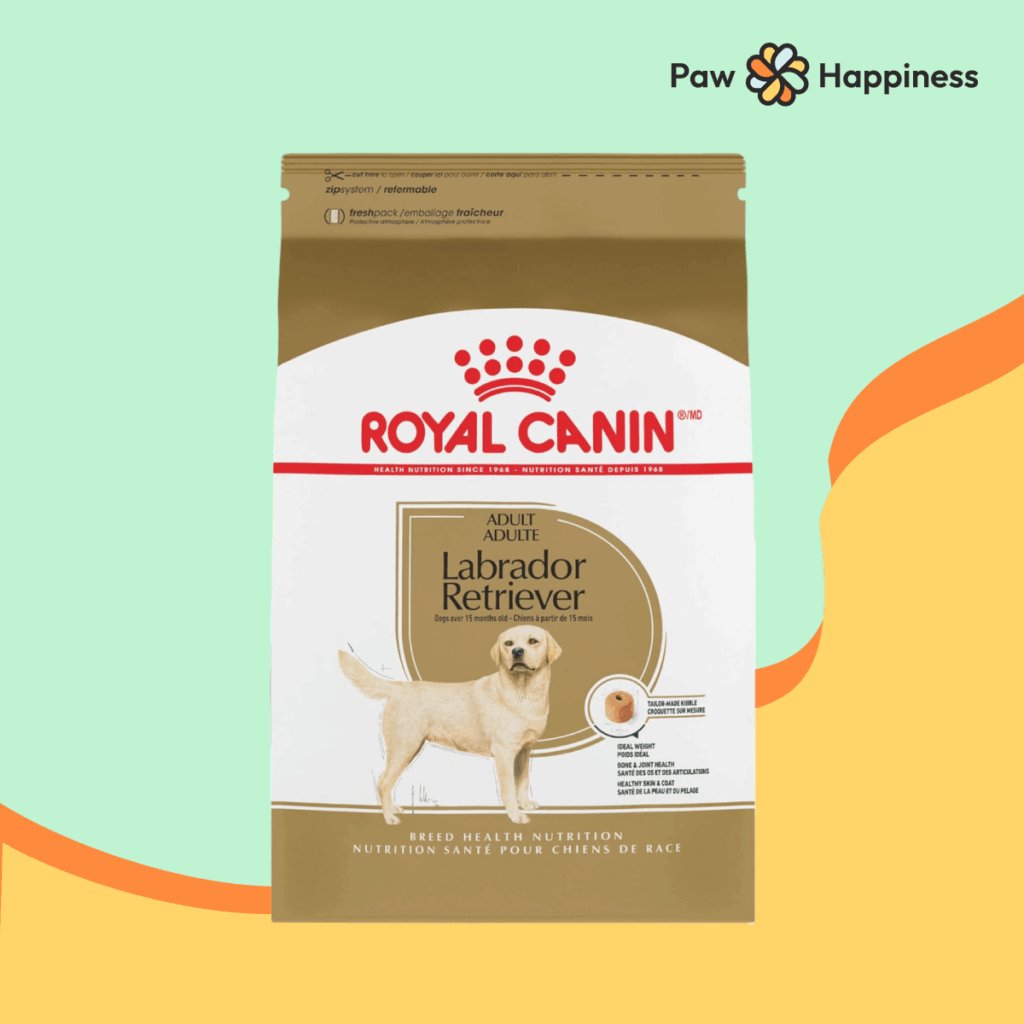
I recommend this food for Lab owners who want breed-specific nutrition and don’t mind paying extra for specialized kibble that addresses common Labrador health concerns.
Pros
- The donut-shaped kibble actually works to slow down gulping and encourages proper chewing
- Contains joint-supporting ingredients like glucosamine and EPA that help maintain mobility in these large dogs
- Helps with weight control through carefully measured calories and fat content
Cons
- The price is noticeably higher than general large breed formulas
- Some dogs may need time to adjust to the unique kibble shape
- The 30-pound bag takes up considerable storage space
I’ve been feeding my Labrador this food for several months now, and the difference in his eating habits is clear. The unique kibble shape forces him to slow down instead of inhaling his meals in seconds. This has reduced his post-meal hiccups and seems to help with digestion overall.
The formula addresses the typical Lab struggle with weight maintenance. My dog stays lean and active without seeming hungry between meals. His coat looks healthy and his skin hasn’t had the dry patches we dealt with on previous foods.
Joint support is built into this food, which matters for a breed prone to hip and elbow problems. While I can’t measure joint health directly, my dog maintains his energy during long walks and doesn’t show stiffness after exercise. The targeted nutrition approach makes sense for a breed with specific health tendencies.
The cost is the main drawback I’ve noticed. A 30-pound bag runs higher than comparable foods, though it lasts a reasonable amount of time. My dog took about a week to fully accept the different kibble texture, so I mixed it gradually with his old food during the transition.
Blue Buffalo Life Protection Formula Small Bite
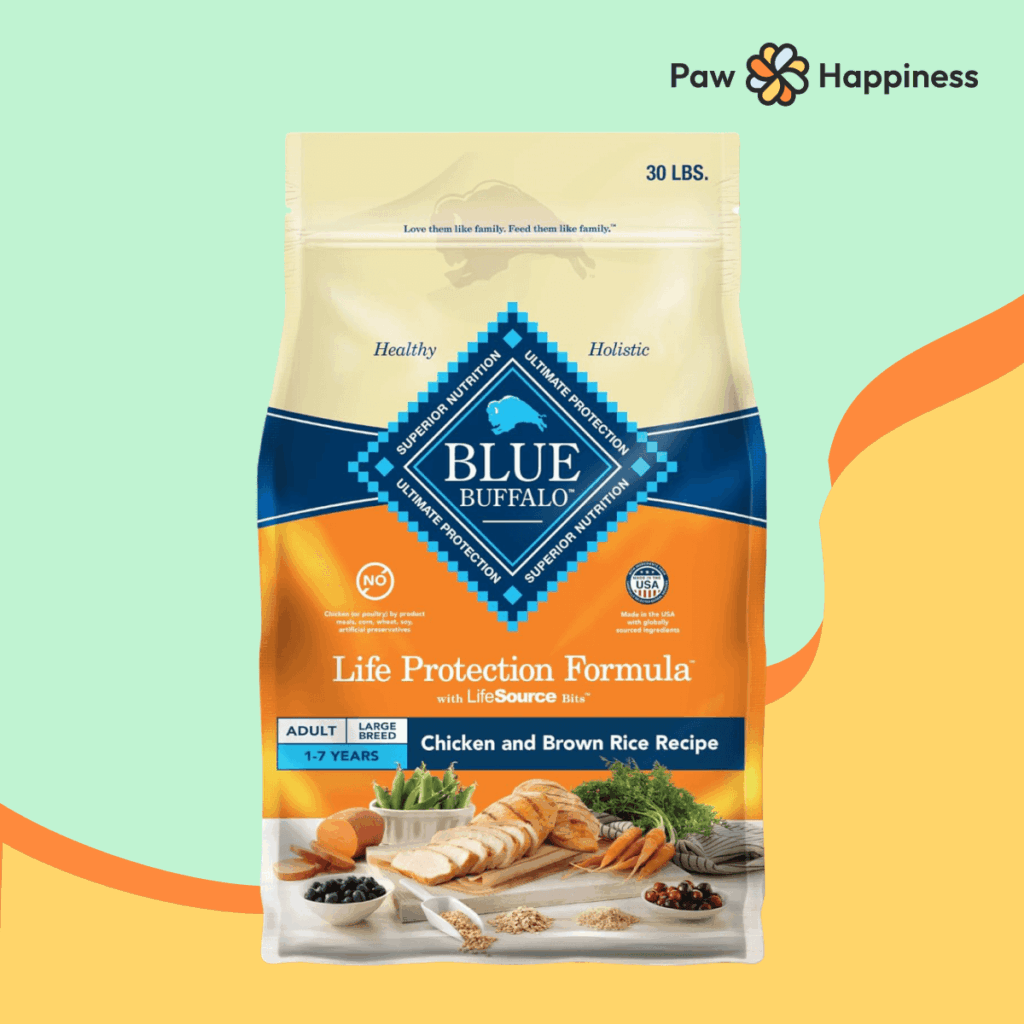
This food works well for Labs who need quality nutrition, though the small kibble size might not be ideal for larger breeds.
Pros
- Real chicken serves as the main ingredient, which keeps my Lab’s energy levels steady throughout the day
- The LifeSource Bits provide extra antioxidants that support immune health without adding artificial ingredients
- My dog’s coat became noticeably shinier after a few weeks on this food
Cons
- The small bite size means my Labrador tends to gulp it down too quickly without chewing
- This formula costs more than many other chicken and rice options on the market
- The 30-pound bag runs out faster than expected when feeding a large breed like a Lab
I switched my Labrador to Blue Buffalo Life Protection Formula after looking for something without corn or wheat fillers. The chicken is the first ingredient, which matters because Labs need good protein for their active lifestyle.
The small kibble pieces caught me off guard at first. My 70-pound Lab doesn’t really need tiny bites, so she just swallows them whole most of the time. Smaller dogs would probably appreciate this size more.
I noticed her coat looking healthier after about three weeks. The omega fatty acids in the recipe seem to do their job. Her skin isn’t as dry either, which was a problem with her old food.
The dark LifeSource Bits mixed throughout provide vitamins and minerals. My dog doesn’t pick around them, so she gets those nutrients with every meal. The kibble doesn’t have any weird smell like some other brands I’ve tried.
The price is higher than basic grocery store brands. A 30-pound bag lasts my Lab about three weeks, so the cost adds up quickly. You’re paying for better ingredients though, with no by-products or artificial preservatives.
My dog had no stomach issues when I transitioned her to this food. Her energy stayed consistent, and she seems satisfied after meals. The brown rice provides good carbohydrates without using corn as a cheap filler.
Wag Salmon & Sweet Potato Grain Free Dog Food
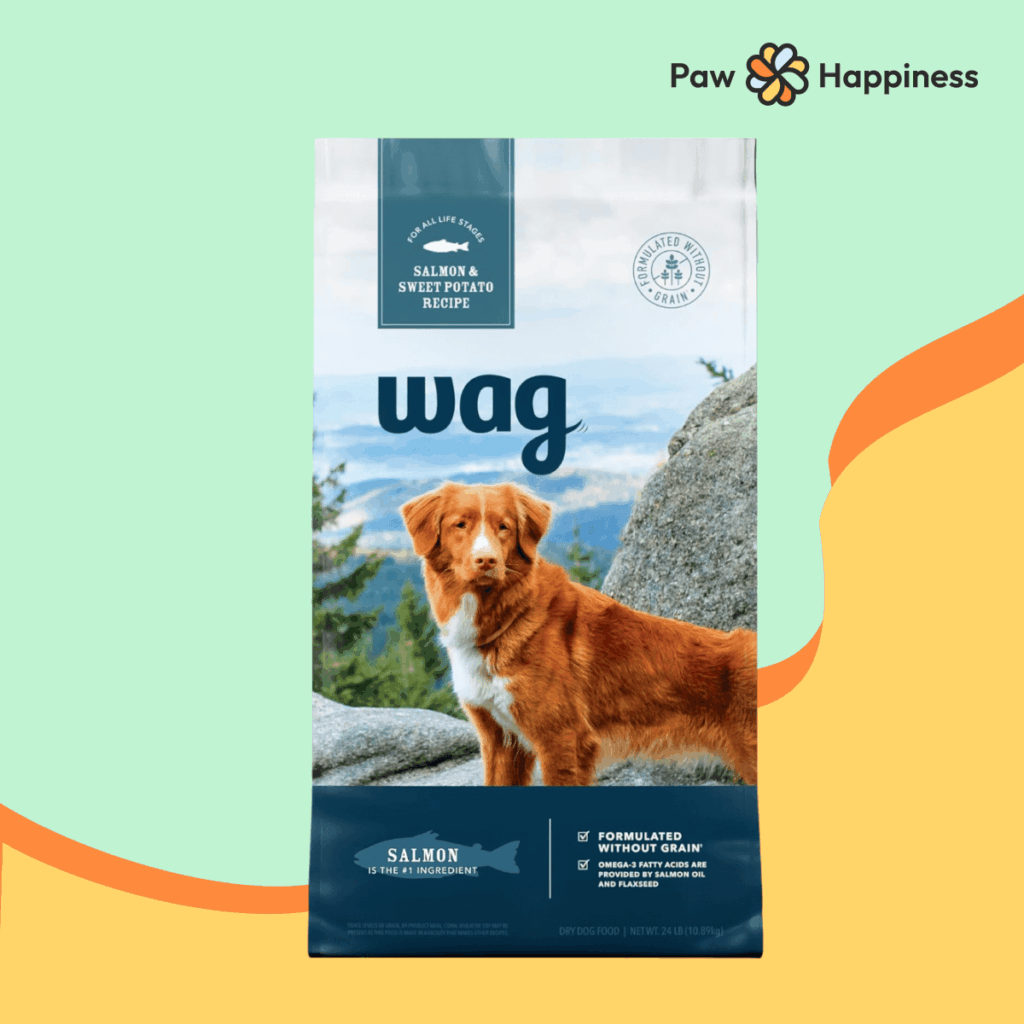
This budget-friendly grain-free option delivers solid nutrition for Labradors without the premium price tag.
Pros
- Salmon as the first ingredient provides quality protein for muscle maintenance
- No artificial colors, flavors, or preservatives keeps meals clean and simple
- Significantly cheaper than comparable grain-free brands while maintaining similar nutritional value
Cons
- The kibble runs on the dry side, so your Lab will drink more water throughout the day
- Delivery timing can be unreliable with shipments arriving several days late
- You need to transition slowly over 7-10 days to avoid stomach upset
I switched to this food after spending too much on premium brands at pet stores. My Lab took to it well after a proper transition period. The salmon-based formula gives him the protein he needs without grain fillers that some dogs struggle with.
The kibble size works perfectly for Labs and other medium to large breeds. I noticed my dog’s coat stayed shiny and healthy after a few weeks on this food. The pellets are firm and crunchy, which helps with dental health during meals.
The main thing I had to adjust for was keeping the water bowl filled more often. This food seems drier than other brands, so my Lab drinks noticeably more water after eating. It’s not a deal-breaker, just something to be aware of when you make the switch.
The value here is hard to beat if you’re feeding a larger dog like a Labrador. You get grain-free nutrition with salmon as the primary ingredient at a fraction of what you’d pay for similar foods from boutique brands.
Buying Guide
When I shop for Labrador Retriever food, I start by checking the protein content. Labs are active dogs that need at least 25-30% protein in their diet to maintain muscle mass.
Key Ingredients to Look For
I always read the ingredient list carefully. The first ingredient should be a named meat source like chicken, beef, or fish. Real meat provides better nutrition than meat by-products.
I also look for whole grains or healthy carbohydrates. Brown rice, sweet potatoes, and oatmeal give my Lab energy without causing digestive issues.
Important Nutritional Features
| Nutrient | What to Look For |
|---|---|
| Protein | 25-30% minimum |
| Fat | 12-18% for adults |
| Omega Fatty Acids | Supports coat and joint health |
| Glucosamine | Helps protect joints |
| Calcium | 1-1.5% for bone health |
Age and Activity Level Matter
I choose different formulas based on my dog’s life stage. Puppies need higher calories and specific nutrients for growth. Adult Labs need balanced nutrition to prevent weight gain. Senior Labs benefit from lower calories and joint support.
Active Labs need more calories than less active ones. I adjust portion sizes based on my dog’s exercise routine.
Avoid Common Fillers
I skip foods with corn, wheat, or soy as main ingredients. These fillers provide little nutritional value and can cause allergies in some Labs.
I also avoid foods with artificial colors, flavors, or preservatives. Natural preservation methods are safer and healthier for my dog.
Frequently Asked Questions
Labrador Retrievers need specific amounts of protein, fat, and calories based on their age and activity level. The right dog food depends on your Lab’s weight, health conditions, and life stage.
What are the nutritional requirements for Labrador Retrievers?


I recommend dog foods with 25-30% protein for adult Labradors. This protein supports their muscle mass and energy needs.
Fat content should be between 12-18% for most adult Labs. Active dogs need higher fat levels, while less active Labs do better with lower amounts to prevent weight gain.
Labradors need about 1,200-1,600 calories per day depending on their weight and activity. A 70-pound active Lab needs around 1,500 calories daily. Senior or less active Labs need fewer calories.
I look for foods with omega-3 fatty acids for joint health. Glucosamine and chondroitin are important for Labs since they are prone to hip and elbow problems.
How can I tell if a dog food is suitable for my Labrador’s specific health needs?
I check the ingredient list to see if meat is the first ingredient. Real chicken, beef, or fish should come before grains or fillers.
For Labs with joint issues, I look for added glucosamine and chondroitin on the label. These ingredients help maintain healthy cartilage and joints.
If my Lab has skin allergies, I choose foods with limited ingredients and novel proteins like duck or venison. I avoid common allergens like chicken or beef in these cases.
Labs prone to bloat need smaller, more frequent meals. I select kibble designed to slow down eating or use a slow-feed bowl.
I always consult my vet before switching foods for Labs with specific health conditions. They can recommend foods formulated for kidney disease, diabetes, or other medical issues.
What are the benefits of choosing a grain-free diet for my Labrador?
Grain-free diets can help Labs with grain allergies or sensitivities. Dogs with these issues often show symptoms like itchy skin, ear infections, or digestive problems.
I find that grain-free foods use sweet potatoes, peas, or lentils as carbohydrate sources. These ingredients provide energy without common grain allergens.
Most healthy Labradors don’t need grain-free food. Grains like brown rice and oatmeal are safe and nutritious for Labs without allergies.
I’m aware that some grain-free diets have been linked to heart problems in dogs. The FDA is investigating a possible connection between certain grain-free foods and dilated cardiomyopathy.
I talk to my vet before switching to grain-free food. They can help me decide if it’s necessary based on my Lab’s specific health needs.






Extra Deals & Recommendations From Our Partners
Discover exclusive offers, tools, and products from brands we collaborate with.


Ninja Foodi 9-in-1 Pressure Cooker & Air Fryer
Cook 2 foods, 2 ways at once with this air fryer’s 2 independent baskets—no back-to-back batches. DualZone Technology offers Smart Finish for synchronized cooking and Match Cook to copy settings across both zones. Enjoy 6 functions: Air Fry, Broil, Roast, Bake, Reheat, and Dehydrate. With an 8-qt capacity, separate heating zones, easy cleaning, and up to 75% less fat, it’s perfect for fast family meals.

Pet Products Heated Cat Bed Indoor
This large heated cat bed features soft, flexible sidewalls and a 4-watt removable heater that warms to your pet’s body temperature for safe, energy-efficient comfort. Fully washable once the heater is removed, it’s ideal for large cats and small dogs. Designed by K&H with 25+ years of expertise, this safety-certified bed offers year-round coziness and reliable quality.

Rocco & Roxie Stain & Odor Eliminator
Certified gentle and safe, this pet carpet cleaner is chlorine-free and color-safe, approved by the CRI for all carpets. Its powerful enzymes eliminate tough stains and odors from urine, feces, vomit, and other organic spills. Works on carpets, floors, furniture, clothes, and pet areas. Effective, pet-friendly, and backed by a satisfaction guarantee for worry-free cleaning.

Milk-Bone Soft & Chewy Dog Treats, Beef & Filet Mignon Recipe
Milk-Bone Soft & Chewy Beef & Filet Mignon Recipe dog treats are made with real chuck roast for a delicious, tender texture dogs love. Suitable for dogs of all sizes, these treats come in a 25-ounce container and are fortified with 12 essential vitamins and minerals. A trusted, feel-good reward dogs have loved since 1908.

Best Pet Supplies Voyager Step-in Air Harness
This lightweight step-in vest harness offers a secure and comfortable fit when sized using the provided measurement guide, as sizing does not correspond to breed or weight and is not suitable for large dogs. Made from soft, breathable air mesh, it’s fast-drying and comfortable year-round. Reflective bands improve visibility in low light, while triple security—hook and loop closure, sturdy buckle, and double D-rings—keeps your pet safe. Easy to put on for stress-free walks.

Wuffes Advanced Dog Hip and Joint Supplement with Glucosamine
Powerful Joint Support: Advanced Hip & Joint Support chews are designed to help maintain your pet’s joint health and overall mobility, promoting comfort and a better quality of life - especially for aging or active dogs.

TUG 360° Tangle-Free Retractable Dog Leash
This retractable dog leash is designed for dogs of all sizes, with Small for pets under 35 lbs, Medium under 55 lbs, and Large under 110 lbs. Featuring a durable 16 ft retractable tape with a 360° tangle-free design, it offers smooth retraction and control. The quick lock and unlock button allows easy one-handed operation, while the ergonomic anti-slip handle ensures comfort on long walks. A heavy-duty internal coil provides reliable, consistent recoil for safe outdoor adventures.

Petmate Open Top Litter Pan — Best for Easy Cleaning
This covered litter box provides cat privacy with high walls and a wide opening, perfect even for large cats. The grated top helps trap loose litter from paws to keep floors clean. Built-in handles make lifting easy, and a handy hook keeps your scoop within reach. Made in the USA from 95% post-industrial recycled materials, it’s an eco-friendly, practical choice for any home.